
Table of Contents
- Understanding Your Home’s First Line of Defense: The Thermal-Magnetic Circuit Breaker
- Decoding Your Breaker’s Message: Overloads, Short Circuits, and Ground Faults
- Step-by-Step: How to Safely Reset a Tripped Breaker
- When DIY Ends and Professional Electrical Service Begins: 8 Warning Signs
- Local Reality Check: Outdated Electrical Panels in Pacific Northwest Homes
- Key Takeaways
You’re in the middle of preparing dinner when suddenly—darkness. The lights go out, the microwave stops mid-cycle, and you hear that familiar click from the electrical panel. Or perhaps you’re deep into a work-from-home project when your entire home office shuts down without warning. For homeowners across the Portland-Vancouver area, a tripped circuit breaker isn’t just an inconvenience—it’s a frustrating mystery that disrupts daily life. But here’s the critical perspective shift: when your circuit breaker trips, it’s not actually malfunctioning. It’s performing its most important job—protecting your family from electrical fires and electrocution. Every year, electrical distribution equipment is responsible for approximately 46,700 home structure fires in the United States, causing 390 deaths and $1.5 billion in property damage. Your circuit breaker stands as the first line of defense against becoming part of these statistics. For homeowners in the Pacific Northwest, this issue carries particular significance. Many homes in our region were built before 1980, during an era when electrical panels were designed for far less demanding lifestyles. These older systems now struggle under the weight of modern appliances, smart home technology, and electric vehicle chargers. Understanding when you can safely troubleshoot a tripped breaker yourself—and when you need to call Sarkinen Electrical for professional intervention—isn’t just about convenience. It’s about safety. In this comprehensive guide, we’ll demystify why circuit breakers trip, teach you safe DIY troubleshooting steps, and help you recognize the red flags that demand immediate professional attention. At Sarkinen Electrical, we’re committed to electrical safety education throughout the Portland-Vancouver metro area, because an informed homeowner is a safer homeowner.
Understanding Your Home’s First Line of Defense: The Thermal-Magnetic Circuit Breaker
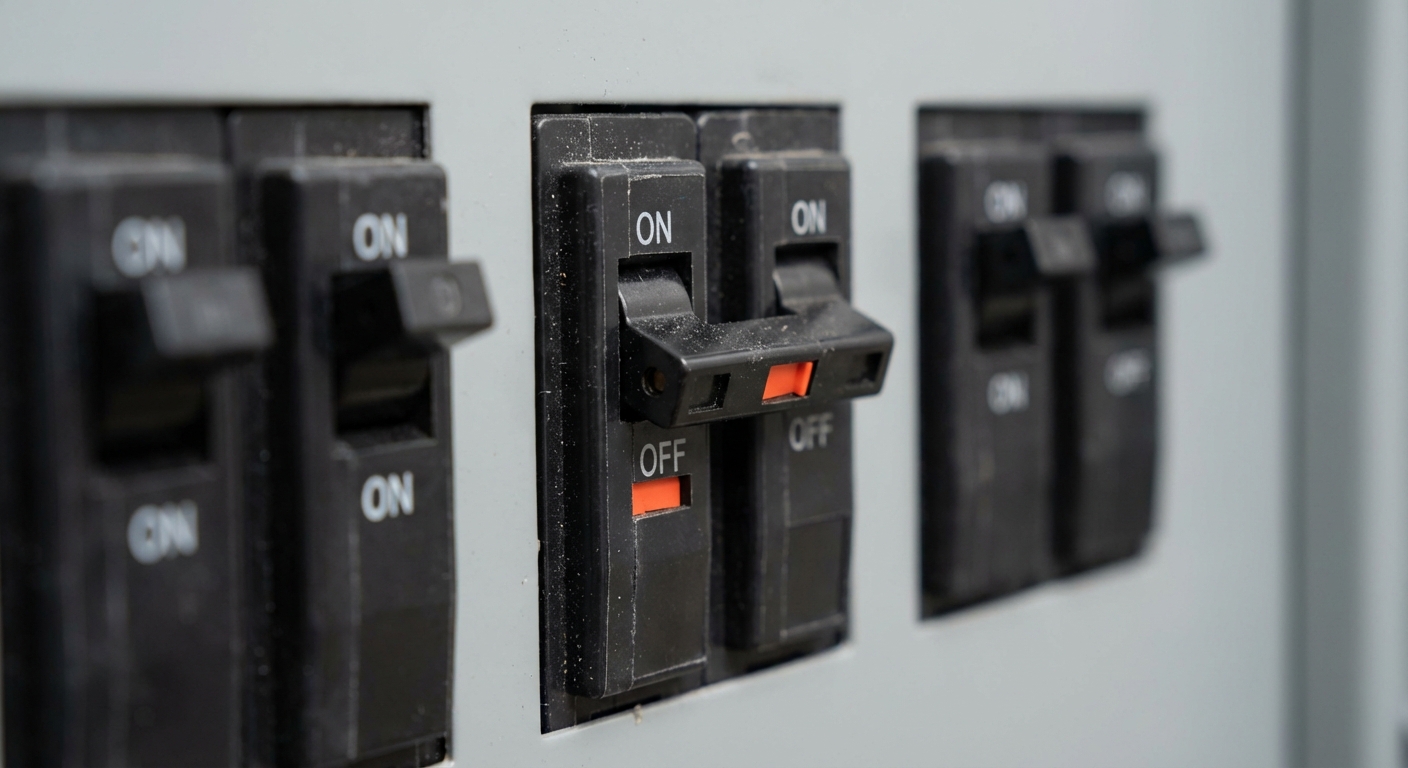
Before we can troubleshoot tripped breakers, we need to understand exactly how these ingenious devices work. Modern residential circuit breakers are sophisticated “thermal-magnetic” devices designed to respond to two completely different electrical threats. Understanding this dual-protection system helps explain why sometimes your breaker trips immediately, while other times it takes several minutes.
The Thermal Mechanism: Protection Against Overloads
Inside each circuit breaker sits a bimetallic strip—two different metals bonded together that expand at different rates when heated. As electrical current flows through your circuit, it generates heat. Under normal conditions, this heat remains harmless. But when you overload a circuit by running too many appliances simultaneously, the excessive current causes the bimetallic strip to heat up and bend. This bending action is intentionally gradual, incorporating a time delay that prevents nuisance tripping. Your refrigerator compressor might draw a brief surge when it starts up, but that momentary spike won’t trip the breaker. However, sustained overcurrent—like running a space heater, hair dryer, and microwave on the same 15-amp circuit—will cause the strip to bend far enough to trigger the release mechanism, cutting power before the wiring overheats and starts a fire.
The Magnetic Mechanism: Instant Response to Catastrophic Faults
While the thermal mechanism handles gradual overloads, some electrical problems require immediate action. Short circuits and ground faults can generate massive current spikes—thousands of amps in mere milliseconds. The thermal mechanism is too slow to prevent disaster in these scenarios. That’s where the magnetic mechanism comes in. When a sudden, enormous current surge occurs, it creates an intense magnetic field in an electromagnet (called a solenoid) inside the breaker. This magnetic force is powerful enough to instantly pull the trip mechanism, breaking the circuit in milliseconds before sparking can ignite surrounding materials or cause an explosion.
A Brief History of Electrical Protection
Our modern circuit breakers represent more than a century of safety innovation:
- 1879: Thomas Edison patents the first electrical fuse, using a sacrificial wire that melts to break dangerous circuits
- 1924: German inventor Hugo Stotz creates the first reusable miniature circuit breaker, eliminating the need to replace fuses
- 1971: The National Electrical Code mandates Ground-Fault Circuit Interrupters (GFCIs) for bathrooms and outdoor areas, preventing electrocution
- 1999: Arc-Fault Circuit Interrupters (AFCIs) become required for bedroom circuits, detecting dangerous sparking behind walls before fires can start
This evolution reflects our growing understanding of electrical hazards and our commitment to preventing them. Your home’s circuit breaker panel represents the culmination of this safety engineering.
Decoding Your Breaker’s Message: Overloads, Short Circuits, and Ground Faults
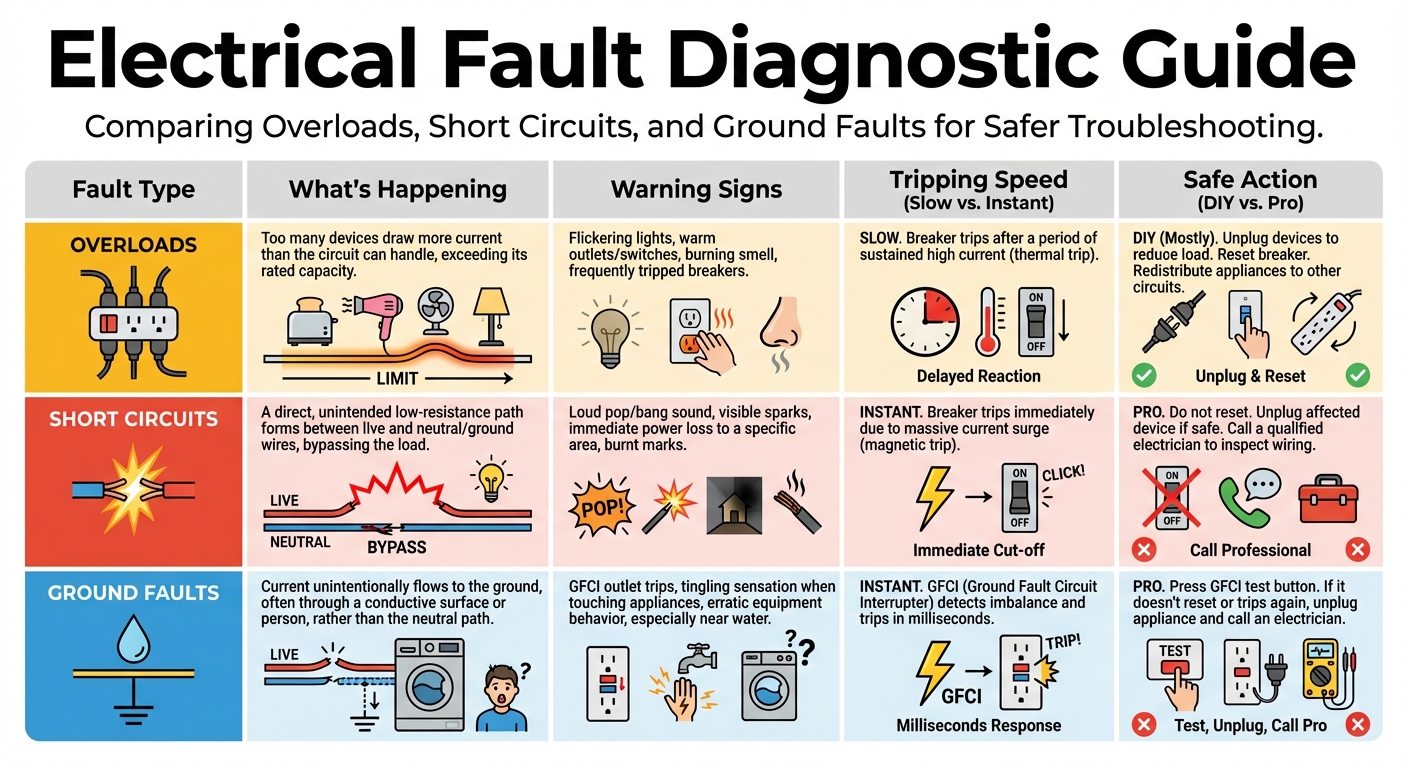
When your circuit breaker trips, it’s sending you a specific message about what went wrong. Understanding these three primary fault types helps you know whether you’re dealing with a simple fix or a serious safety hazard.
Overloaded Circuits: Too Much Demand, Not Enough Supply
An overloaded circuit occurs when the cumulative electrical draw of all connected devices exceeds the circuit’s rated capacity. Think of it like trying to pour a gallon of water through a funnel designed for a quart—something has to give. Common culprits include space heaters (typically 1,500 watts), microwave ovens (1,000-1,500 watts), hair dryers (1,800 watts), and window air conditioning units (1,000-2,000 watts). When several of these high-draw appliances run simultaneously on the same circuit, you’re asking a 15-amp or 20-amp circuit to deliver more than it’s designed to handle.
Diagnostic Clues: The breaker may feel warm (not hot) to the touch, trips after 5-15 minutes of operation, and follows a consistent pattern when specific appliance combinations run together.
Safe DIY Solution: Redistribute high-draw appliances across different circuits. Check appliance labels for amp ratings (or calculate: Watts ÷ 120 Volts = Amps). Ensure no single circuit carries more than 80% of its rated capacity during sustained use.
When to Call Sarkinen Electrical: If overloads persist under normal household use, your home needs additional dedicated circuits or a panel upgrade to safely handle your electrical demands.
Short Circuits: When Wires Touch Where They Shouldn’t
A short circuit represents one of the most dangerous electrical faults. It occurs when a “hot” wire (carrying current) makes direct contact with a “neutral” wire, completely bypassing the intended electrical load. This creates a path of nearly zero resistance, allowing thousands of amps to flow in an instant. The results are dramatic and dangerous: extreme heat generation, bright sparks, popping or crackling sounds, and often a distinctive burning smell. The magnetic mechanism in your breaker responds instantaneously, but even that split-second can leave scorch marks on outlets or switches.
Diagnostic Clues: Immediate tripping when you reset the breaker, visible sparks, audible popping sounds, burning odors, or discoloration around outlets and switches.
Safe DIY Solution: Visually inspect all appliance cords on the affected circuit for obvious damage—frayed insulation, exposed wires, or burnt plugs. If you identify a damaged appliance, unplug it immediately and discard it. Never attempt to repair damaged electrical cords.
When to Call Sarkinen Electrical: Any short circuit originating within walls, inside receptacles, or at junction boxes requires immediate professional diagnosis and repair. If you smell burning or see scorch marks, do not reset the breaker—contact us right away.
Ground Faults: The Electrocution Hazard
A ground fault is a specific type of short circuit where the hot wire contacts either the ground wire or a metal electrical box. While similar to a short circuit in some ways, ground faults pose a unique danger: they can create a path for electricity to flow through a person’s body to the ground, causing potentially fatal electrocution. This is why the National Electrical Code mandates Ground-Fault Circuit Interrupter (GFCI) protection in areas where water and electricity might meet—kitchens, bathrooms, garages, outdoor outlets, and crawl spaces. GFCI devices detect even tiny imbalances in current flow (as small as 4-6 milliamps) and cut power in as little as 1/40th of a second.
Diagnostic Clues: GFCI outlets or breakers tripping, issues that worsen in humid conditions or after rain, problems concentrated near water sources.
Safe DIY Solution: Press the “Reset” button on GFCI outlets or breakers. Ensure all appliances are dry before plugging them in. If a specific appliance consistently trips the GFCI, the appliance likely has an internal ground fault and should be professionally repaired or replaced.
When to Call Sarkinen Electrical: Persistent GFCI tripping indicates moisture intrusion in your electrical system, degraded wire insulation, or faulty appliance wiring. These conditions require professional diagnostic equipment and expertise to safely identify and correct. Our safety inspections can identify these hidden hazards.
Step-by-Step: How to Safely Reset a Tripped Breaker
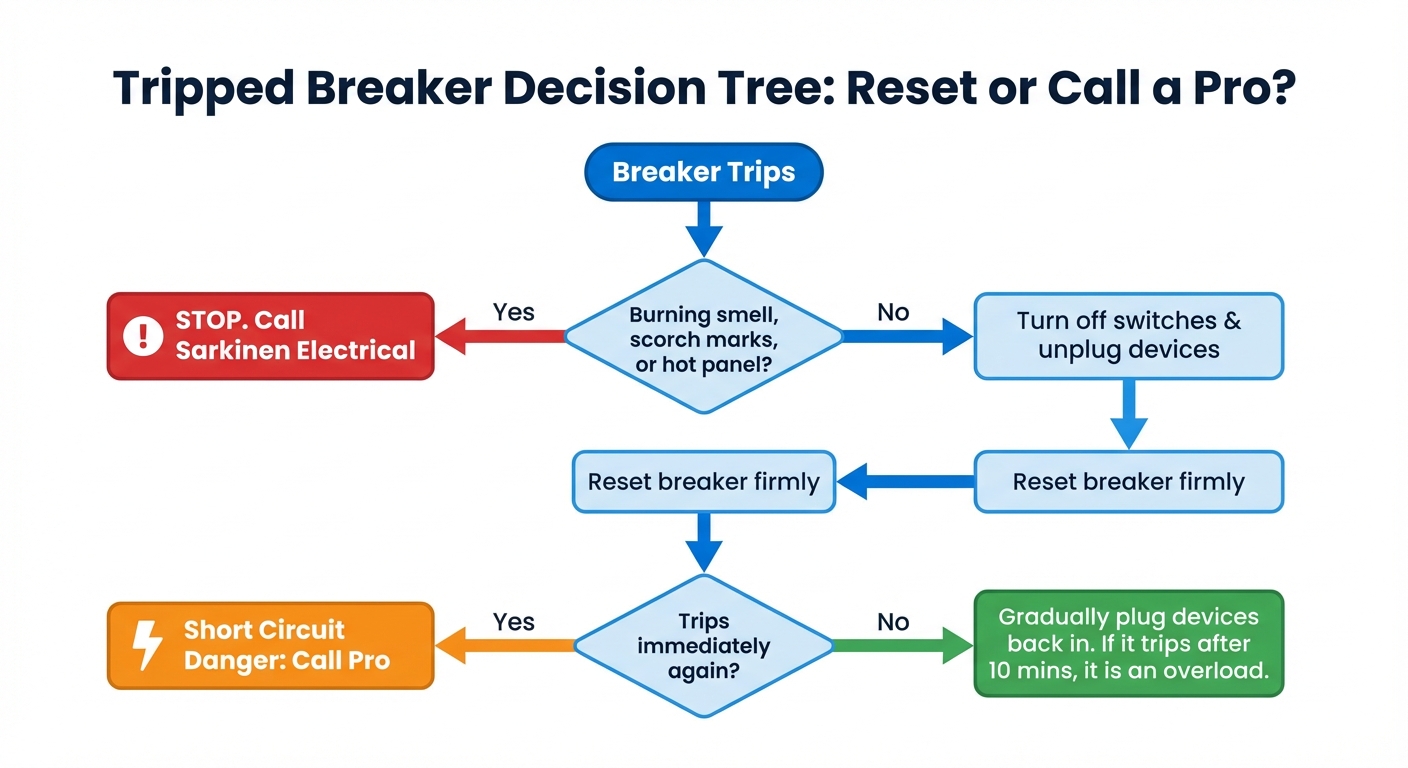
Most homeowners can safely reset a tripped breaker—but only if they follow proper safety protocols and recognize when professional intervention is necessary. This step-by-step process establishes clear boundaries between safe DIY actions and situations requiring licensed expertise.
Pre-Reset Safety Check: Look Before You Touch
Before you even approach your electrical panel, conduct a visual and sensory safety assessment. Look for obvious danger signs:
- Visible smoke or a haze in the air
- Burning smell near the panel, outlets, or switches
- Discolored or melted outlets
- A breaker handle that’s hot (not just warm) to the touch
- Buzzing, crackling, or popping sounds from the panel
Critical Safety Rule:
If ANY of these warning signs are present, do not attempt to reset the breaker. Leave the breaker in the tripped position and call Sarkinen Electrical immediately. These symptoms indicate active electrical faults that pose immediate fire and shock hazards.
The Safe Reset Sequence
If your safety check reveals no danger signs, follow these steps precisely:
- Power Down Everything: Before touching the electrical panel, turn off all light switches and unplug all devices on the affected circuit. This removes the electrical load and helps prevent immediate re-tripping.
- Locate Your Electrical Panel: Most panels are in the garage, basement, utility room, or on an exterior wall. Open the panel door carefully, standing to the side rather than directly in front.
- Identify the Tripped Breaker: A tripped breaker’s handle will be in a middle position—not fully “on” or “off.” Some breakers have a visual indicator window that changes color when tripped.
- Reset Properly: Here’s the crucial step many people get wrong. First, push the breaker handle firmly to the full “off” position. You should feel a definitive click. Then push it back to the “on” position. This two-step process ensures the internal mechanism fully re-engages. Simply pushing the handle toward “on” from the middle position often doesn’t properly reset the breaker.
- Gradually Restore Power: Turn on or plug in devices one at a time, waiting 2-3 minutes between each addition. This helps you identify which specific appliance or combination of appliances caused the original trip.
Interpreting the Results
- Breaker Stays On: You likely experienced a temporary overload. Monitor the circuit and consider redistributing high-draw appliances to other circuits.
- Immediate Re-Trip: This strongly suggests a short circuit or ground fault that requires professional diagnosis. Do not continue trying to reset the breaker.
- Trips After 5-10 Minutes: Probable overload condition. The circuit needs either load reduction or the installation of an additional dedicated circuit for high-draw appliances.
What NOT to Do
- Never force a breaker that won’t reset smoothly—this indicates internal damage
- Never use a breaker as a regular on/off switch—repeated cycling degrades the mechanism
- Never ignore repeated tripping—it’s your electrical system’s distress signal
- Never upgrade to a higher-amperage breaker without upgrading the wire gauge—this removes overcurrent protection and creates a serious fire hazard
When DIY Ends and Professional Electrical Service Begins: 8 Warning Signs
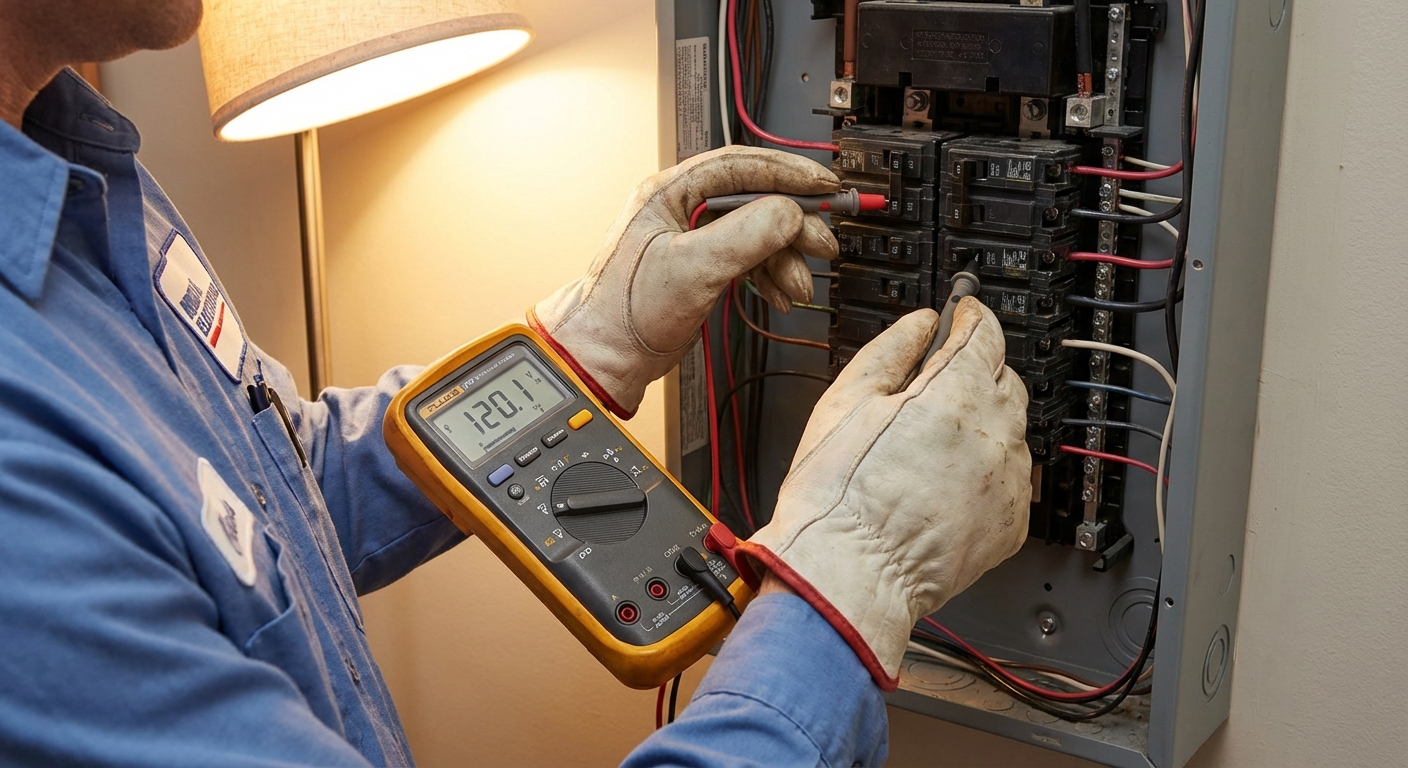
While homeowners can safely reset breakers and redistribute electrical loads, certain scenarios demand immediate professional expertise. Recognizing these warning signs isn’t just about convenience—it’s about preventing catastrophic failure that could destroy your home and endanger your family.
Immediate Emergency Signs (Call Sarkinen Electrical Now)
1. Burning Smell or Visible Smoke
Any burning odor or visible smoke from your electrical panel, outlets, or switches represents an active fire hazard. The smell of burning plastic insulation is distinctive and unmistakable. Do not attempt to investigate the source—evacuate if necessary and call us immediately at 360-258-0370.
2. Panel Hot to Touch
A warm electrical panel during heavy use might be normal, but a panel that’s hot—uncomfortable to touch for more than a second—indicates dangerous resistance heating, loose connections, or failing breakers. This condition can rapidly escalate to panel failure and fire.
3. Buzzing, Crackling, or Popping Sounds
These sounds indicate electrical arcing—electricity jumping across air gaps due to loose connections or degraded components. Arcing generates temperatures exceeding 3,000°F, hot enough to ignite surrounding materials. Never ignore audible electrical warnings.
4. Scorch Marks or Discoloration
Dark discoloration around breakers, outlets, or switches reveals past overheating events. Even if the breaker currently stays reset, the damage has already occurred and will likely worsen. This requires immediate professional assessment.
5. Breaker Won’t Stay Reset
If a breaker immediately trips even with all loads disconnected, the breaker itself has likely failed or there’s a fault in the circuit wiring. Continuing to reset it accomplishes nothing and risks damaging the panel.
Serious Concerns Requiring Professional Inspection
6. Repeated Tripping Under Normal Use
When the same breaker trips repeatedly during ordinary household activities—not because you’re running three space heaters simultaneously—your electrical system is telling you it can’t safely support your actual needs. This requires load analysis and likely circuit expansion or panel upgrade.
7. Multiple Breakers Tripping Simultaneously
When several unrelated breakers trip at once, the problem exists upstream—possibly at the main panel, service entrance, or even the utility connection. This level of troubleshooting requires professional diagnostic equipment and expertise.
8. Frequent GFCI or AFCI Trips
Modern GFCI and AFCI breakers are designed to be sensitive—that’s how they save lives. If these safety devices trip frequently, they’re detecting legitimate hazards: ground faults, moisture intrusion, or dangerous arcing conditions. Don’t assume the breaker is “too sensitive” or “defective”—these trips indicate real safety concerns that require professional investigation.
The Professional Diagnostic Advantage
When you call Sarkinen Electrical for a circuit breaker issue, you’re not just getting a repair—you’re getting comprehensive diagnostic capabilities that homeowners simply don’t have access to:
- Thermal Imaging Cameras that detect hot spots invisible to the naked eye, identifying problems before they cause failure
- Insulation Resistance Testing that measures the integrity of wire insulation, revealing degradation before it causes shorts
- Load Analysis that determines whether your existing panel can safely support your actual electrical demands
- Code Compliance Expertise ensuring all work meets current National Electrical Code requirements
Professional diagnosis often prevents catastrophic failures that would cost tens of thousands of dollars in emergency repairs, fire damage, and temporary housing. The cost of a proper electrical inspection is a fraction of the potential consequences of ignoring warning signs.
Sarkinen Electrical’s Comprehensive Safety Inspection
When you schedule an electrical panel inspection with Sarkinen Electrical, we provide:
- Detailed visual assessment of all panel components
- Testing of all breakers for proper operation
- Thermal scanning to identify overheating components
- Load calculation to determine if your panel is appropriately sized
- Transparent explanation of all findings with photographic documentation
- Written recommendations prioritized by safety importance
- Upfront, honest pricing with no surprise charges
We believe in educating our clients, not scaring them. Our goal is to give you the information you need to make informed decisions about your home’s electrical safety.
Local Reality Check: Outdated Electrical Panels in Pacific Northwest Homes
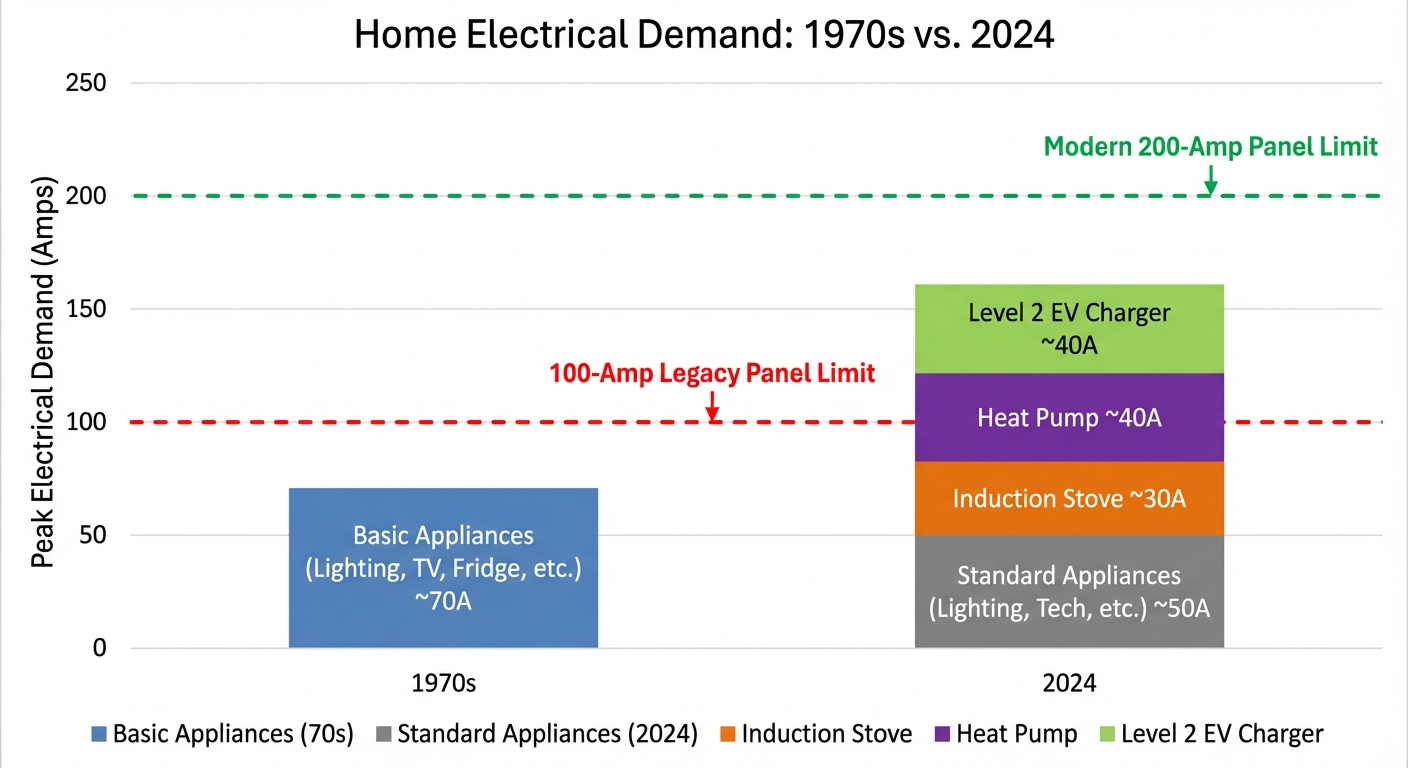
If you live in the Portland-Vancouver metro area, the age of your home plays a critical role in understanding frequent breaker trips. The housing stock in our region tells a specific story about electrical infrastructure—one that directly impacts your daily experience with circuit breakers.
Housing Age Demographics and Electrical Capacity
A significant percentage of homes in the Portland-Vancouver metropolitan area were built before 1980, during an era when electrical demands were dramatically different from today. These homes were typically equipped with 60-amp or 100-amp electrical service panels—adequate for the limited electrical loads of the 1960s and 1970s, but dangerously undersized for modern life. To put this in perspective: a 1970s home might have had a refrigerator, an electric range, a television, a few lamps, and perhaps a window air conditioner. Today’s homes contain:
- High-efficiency heat pumps drawing 30-60 amps
- Level 2 electric vehicle chargers requiring 30-50 amps
- Induction cooktops using 30-40 amps
- Multiple computers, smart home devices, and entertainment systems
- Whole-home backup battery systems
- Tankless electric water heaters
The modern standard is a 200-amp service panel, designed to safely handle these contemporary electrical demands. When an older home with a 100-amp panel tries to support modern appliances, the circuit breakers aren’t malfunctioning when they trip—they’re correctly protecting an electrical system that’s fundamentally inadequate for current needs.
The Federal Pacific Electric and Zinsco Crisis
Beyond simple undersizing, many Pacific Northwest homes face a more insidious problem: dangerous panel brands that actually fail to provide proper protection. During the 1970s and 1980s, millions of homes nationwide—including a substantial number in our region—were equipped with Federal Pacific Electric (FPE) “Stab-Lok” or Zinsco electrical panels. Subsequent investigations by the Consumer Product Safety Commission revealed shocking defects in these panels. FPE breakers failed to trip under overload conditions up to 60% of the time in testing. Rather than protecting your home from electrical fires, these panels actually increase fire risk by allowing dangerous overcurrent conditions to persist. Zinsco panels suffer from a different but equally dangerous problem: the aluminum bus bars oxidize over time, creating high resistance connections that can overheat and fail catastrophically without ever tripping the breaker.
Action Item for Homeowners:
Check your electrical panel brand, usually labeled on the inside of the panel door. If you have a Federal Pacific Electric (FPE) or Zinsco panel, replacement isn’t an optional upgrade—it’s a critical safety necessity. Sarkinen Electrical can perform a priority safety evaluation and provide options for panel replacement.
The Modern Energy Transition Challenge
The electrical infrastructure challenge extends beyond older homes. Even relatively recent homes (1990s-early 2000s) often struggle with today’s energy transition. The U.S. Department of Energy reports that average household electricity consumption continues to increase, driven by:
- The shift from gas to electric appliances for improved efficiency and reduced carbon emissions
- Work-from-home setups requiring constant power for computers, monitors, printers, and networking equipment
- Electric vehicle adoption, with homeowners installing high-amperage charging stations
- Advanced HVAC systems using heat pump technology
A homeowner who purchases an electric vehicle and installs a Level 2 charger often discovers their existing 150-amp or 200-amp panel is already at or near capacity. Adding the 40-50 amp continuous load of an EV charger causes frequent breaker trips when the charger runs simultaneously with the air conditioning, electric range, or electric dryer.
The Heavy-Up Solution: What It Means and Why It Matters
When Sarkinen Electrical recommends a “panel heavy-up” or “service upgrade,” we’re proposing a comprehensive solution to electrical capacity limitations. This process typically involves:
- Utility Coordination: We work with Portland General Electric or Clark Public Utilities to upgrade your service entrance and meter
- New 200-Amp Main Panel: Installation of a modern, code-compliant electrical panel with sufficient capacity for current and future needs
- Circuit Redistribution: Strategic reorganization of circuits to balance loads and accommodate new high-draw appliances
- Safety Upgrades: Addition of required AFCI and GFCI protection to bring your home up to current National Electrical Code standards
Cost-Benefit Analysis
The investment in a panel upgrade provides multiple returns:
- Fire Prevention: Eliminates the primary cause of electrical fires in older homes
- Home Value: Increases property value and marketability—many home inspections flag outdated panels as serious defects requiring correction before sale
- Modern Amenities: Enables safe installation of electric vehicle chargers, heat pumps, induction cooking, and other high-efficiency appliances
- Insurance: Some insurance companies offer reduced premiums for homes with updated electrical systems, while others may refuse coverage for homes with known-defective FPE or Zinsco panels
A panel upgrade isn’t an expense—it’s an investment in safety, functionality, and property value. For many Pacific Northwest homeowners, it transforms frequent breaker trips from a recurring frustration into a resolved problem.
Key Takeaways
Your circuit breaker isn’t your enemy—it’s your home’s guardian against electrical fires and electrocution. When breakers trip frequently, they’re delivering an important message about your electrical system’s limitations or problems. As we’ve explored throughout this guide, homeowners can safely troubleshoot many breaker trips by understanding the difference between overloads, short circuits, and ground faults. You can redistribute electrical loads, identify problem appliances, and properly reset breakers following the safety protocols we’ve outlined. These DIY steps solve many common issues and restore your power safely. However, recognizing when professional expertise is necessary isn’t a limitation—it’s wisdom. Burning smells, repeated trips under normal use, outdated electrical panels, and notorious Federal Pacific Electric or Zinsco equipment all demand professional attention. These aren’t situations where a homeowner’s determination and research can substitute for licensed expertise and specialized diagnostic equipment. For homeowners in the Portland-Vancouver area, the age and capacity of your electrical panel matters more than in newer housing markets. If your home was built before 1980, or if you’re integrating modern electric appliances and vehicle chargers into an older electrical system, frequent breaker trips may be your home’s way of saying “I need an upgrade to safely support your lifestyle.”
The Sarkinen Electrical Commitment
At Sarkinen Electrical, we bring deep expertise in Pacific Northwest housing stock to every service call. We understand the specific challenges of homes in our region—from undersized panels in mid-century construction to the integration of modern electric systems into older infrastructure. Our approach is fundamentally educational: we explain what we find, why it matters, and what your options are, always prioritizing safety and code compliance. Whether you need a comprehensive panel inspection, troubleshooting for recurring breaker trips, or a full service upgrade to 200-amp capacity, we provide transparent pricing, detailed explanations, and quality workmanship backed by our commitment to electrical safety. Your circuit breaker’s job is to keep your family safe. Our job is to make sure it can do that job effectively. If your breakers are tripping frequently, don’t ignore the warning—let’s diagnose the root cause together and implement the right solution for your home’s specific needs.
Ready to Solve Your Circuit Breaker Issues Once and For All?
Contact Sarkinen Electrical today to schedule a comprehensive electrical safety inspection. We’ll evaluate your panel, test your circuits, and provide you with clear recommendations and honest pricing. Your home’s electrical safety is too important to leave to chance.
Call us at 360-258-0370 (Vancouver) or 503-809-5733 (Portland)
References:
- U.S. Consumer Product Safety Commission (CPSC). (2023). Electrical Safety Foundation: Circuit Breakers. https://www.cpsc.gov/safety-education/safety-guides/home/electrical-safety
- National Electrical Manufacturers Association (NEMA). (2022). Understanding Miniature Circuit Breakers. https://www.nema.org/standards/view/mold-case-circuit-breakers
- National Fire Protection Association (NFPA). (2023). NFPA 70: National Electrical Code (NEC) Evolution. https://www.nfpa.org/codes-and-standards/all-codes-and-standards/list-of-codes-and-standards/detail?code=70
- National Fire Protection Association (NFPA). (2022). Home Electrical Fires Report. https://www.nfpa.org/education-and-research/research/nfpa-research/fire-statistical-reports/electrical-fires
- U.S. Census Bureau. (2021). American Housing Survey: Portland-Vancouver-Hillsboro Metro Area Data. https://www.census.gov/programs-surveys/ahs.html
- U.S. Department of Energy. (2023). Upgrading Your Electrical Panel. https://www.energy.gov/energysaver/upgrading-your-electrical-panel
- U.S. Consumer Product Safety Commission (CPSC). (2011). Commission Investigation of Federal Pacific Electric Circuit Breakers. https://www.cpsc.gov/s3fs-public/516.pdf