
Table of Contents
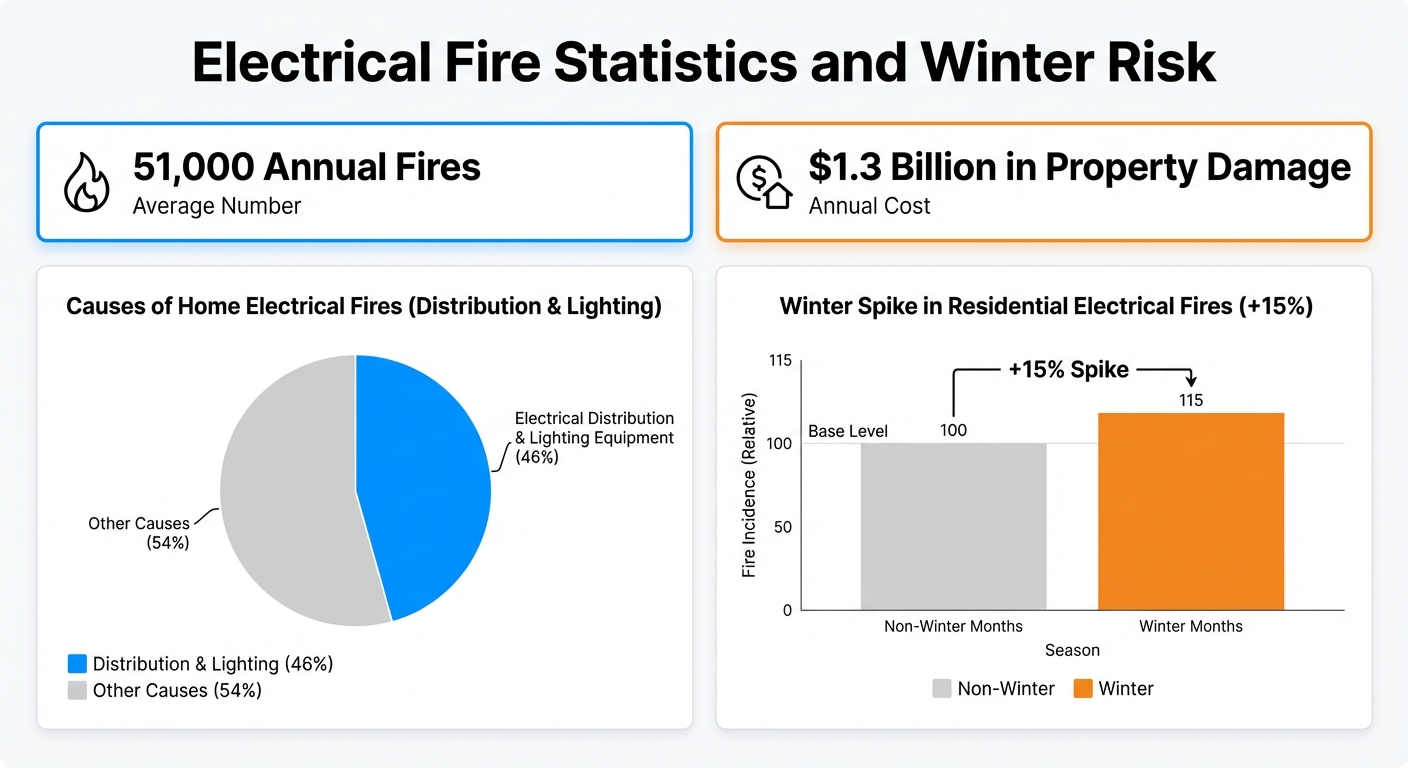
You’re lying in bed when you hear it—a faint buzzing coming from the outlet across the room. You tell yourself it’s nothing. But what if that sound is your home’s way of warning you about a hidden fire hazard? The statistics are sobering: home electrical fires account for an estimated 51,000 fires annually in the U.S., resulting in nearly 500 deaths, 1,400 injuries, and over $1.3 billion in property damage. Even more alarming, electrical distribution and lighting equipment—outlets, switches, and wiring—cause 46% of all home electrical fires. For homeowners in the Pacific Northwest, the risk is compounded by factors unique to our region. Older housing stock, especially in historic Portland neighborhoods, combined with increased winter heating loads, creates heightened vulnerability. Electrical fire incidents spike by 15% during winter months when space heaters, electric blankets, and additional lighting place extra demands on aging electrical systems. In this guide, Sarkinen Electrical breaks down exactly what causes that buzzing sound, why it’s dangerous, and what immediate steps you need to take to protect your home and family.
Understanding the Science: Why Electricity Makes Noise
Under normal circumstances, electricity flows silently through your home’s wiring. U.S. homes run on 60 Hz alternating current, meaning electricity changes direction 120 times per second. When your electrical system is functioning properly, this happens without any audible indication. But when sound appears—that’s when you need to pay attention. Buzzing, humming, or crackling indicates something is physically vibrating or arcing within your electrical system.
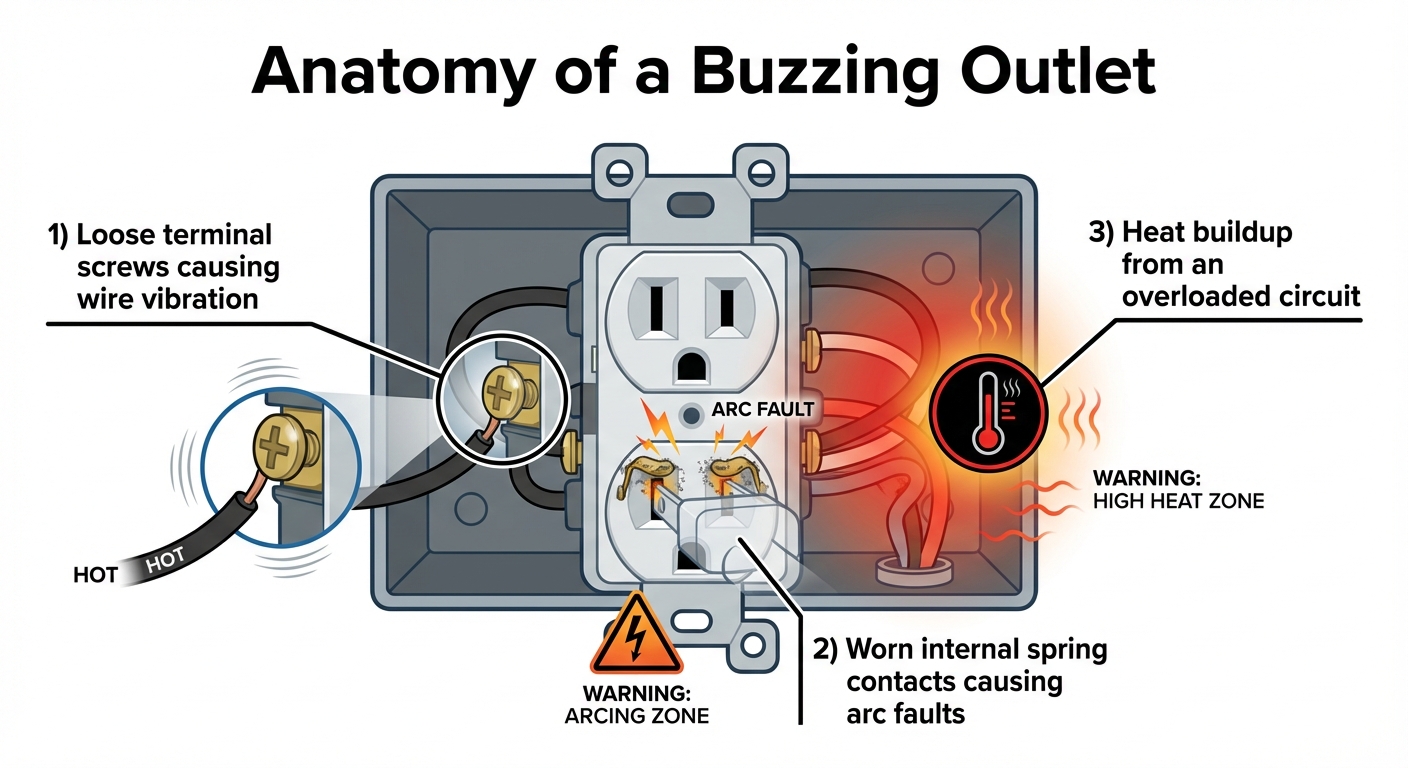
The Four Primary Causes of Electrical Buzzing
1. Loose Connections When the terminal screws that secure wires to your outlet become loose, the alternating current causes the wires to vibrate against the plastic housing at the 60 Hz frequency. This creates a continuous hum or buzz. While this might seem minor, loose connections generate heat and can progress to more dangerous conditions. 2. Arc Faults (Most Dangerous) This is the critical warning sign you cannot ignore. Arc faults occur when electrical current “jumps” across gaps due to compromised insulation or worn contacts. The result is a crackling or sizzling sound—and temperatures that can exceed 10,000°F. We’ll explore the extreme danger of arc faults in detail in the next section. 3. Overloaded Circuits When an outlet is drawing more current than it’s rated for, excessive resistance generates both heat and electromagnetic vibration. This typically produces a low hum and indicates your circuit is working beyond its safe capacity. Common culprits include multiple high-wattage appliances plugged into a single outlet or circuit. 4. Dimmer Switch Interference Older magnetic dimmers naturally produce some humming due to the rapid switching of current used to control light intensity. However, excessive buzzing in modern electronic dimmers signals either incompatibility with your light bulbs (such as using non-dimmable LEDs with a dimmer) or a failing switch that needs immediate replacement.
The Hidden Danger—Why Arc Faults Are Extremely Hazardous
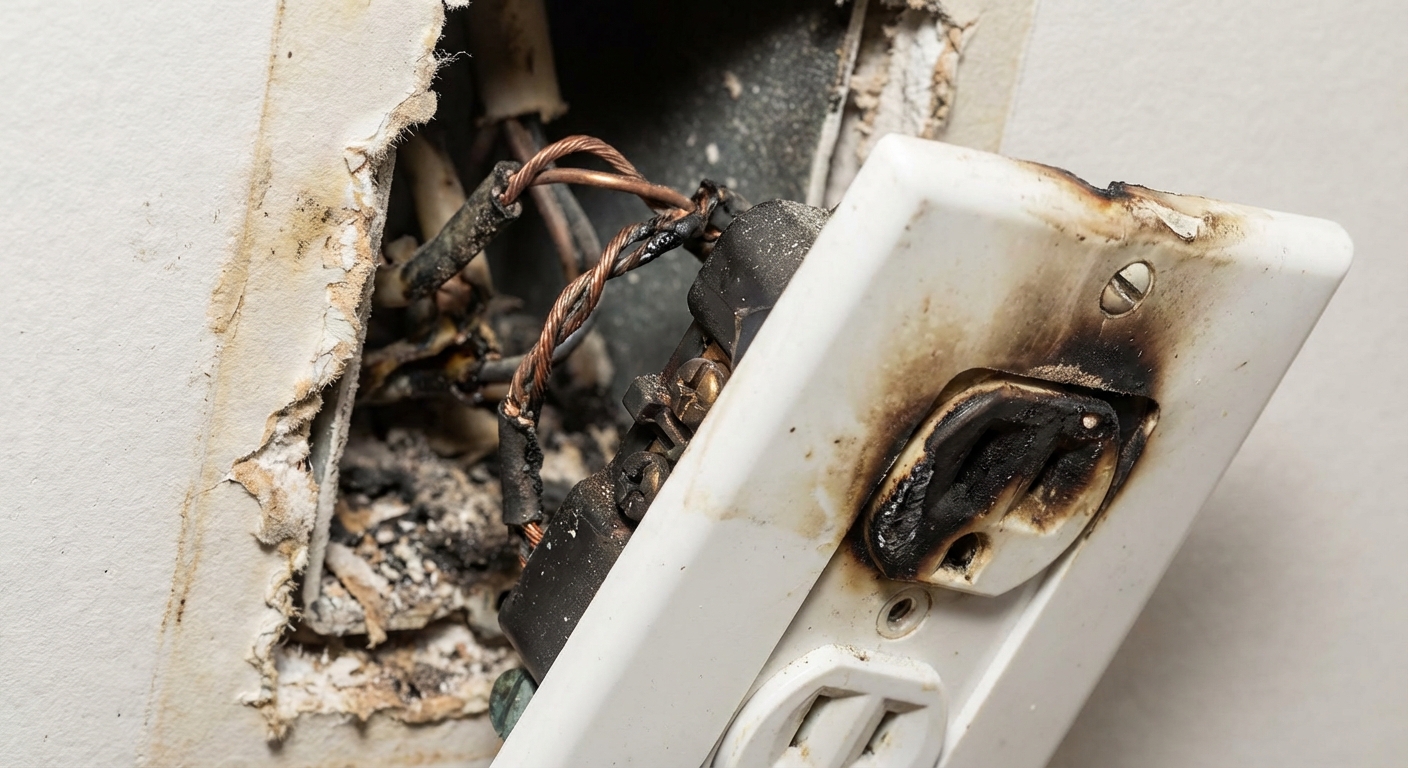
Arc faults represent the most severe electrical hazard in residential wiring. Understanding why requires grasping the extreme physics involved.
Temperature Extremes That Ignite Instantly
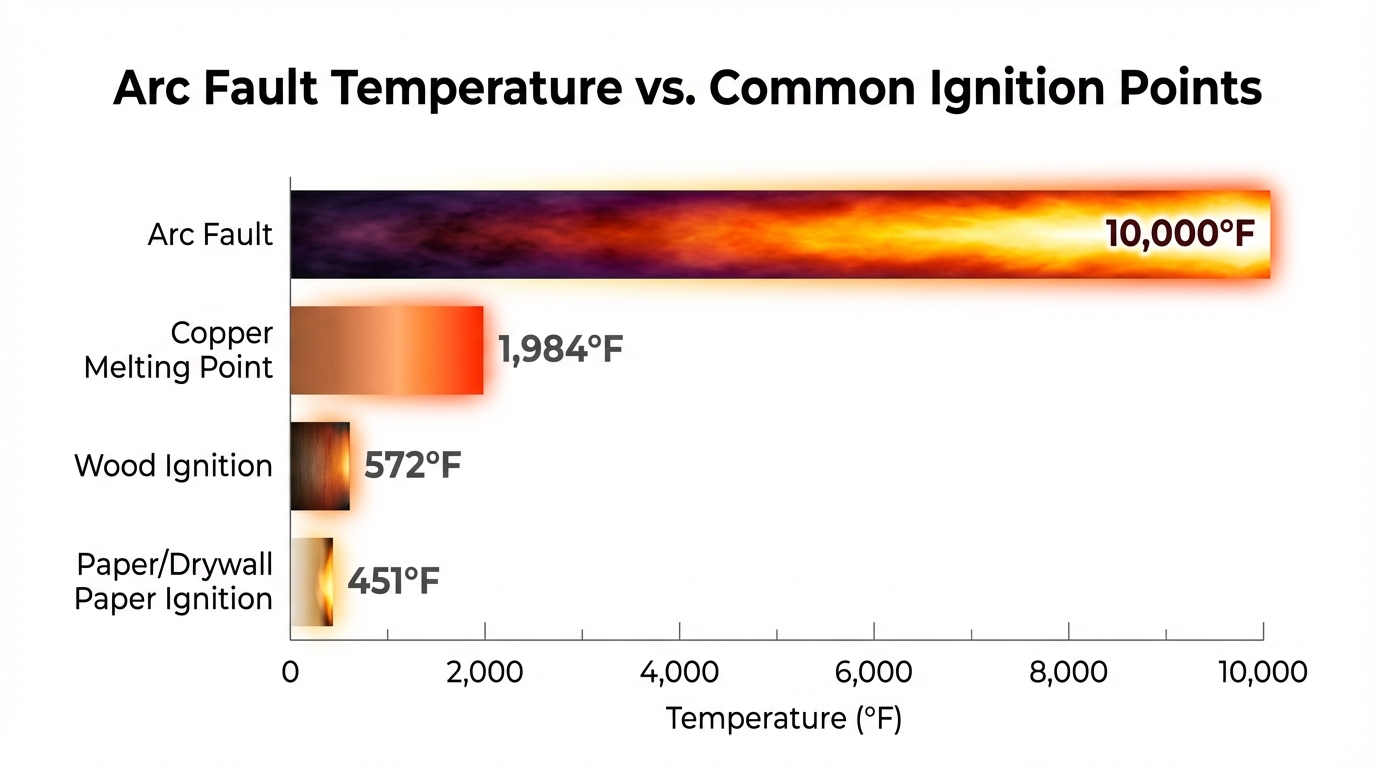
Arc faults can reach temperatures exceeding 10,000°F—more than twice the surface temperature of the sun. To put this in perspective, paper ignites at just 451°F, wood at 572°F, and even copper—the material used in your home’s wiring—melts at 1,984°F.
The Ignition Cascade
At these extreme temperatures, several catastrophic events happen simultaneously:
- Copper wiring begins to melt and degrade
- Plastic insulation around wires liquefies and burns
- Drywall paper backing ignites
- Wooden studs inside your walls catch fire
All of this can happen inside your walls, completely hidden from view, before any visible signs appear.
The Dangerous Carbonization Cycle
Perhaps most insidious is what happens after the initial arcing begins. The extreme heat creates carbon deposits on surrounding materials. Carbon is highly conductive, which means it actually makes subsequent arcing easier. This creates a dangerous feedback loop:
- Initial arc fault occurs due to damaged insulation or worn contacts
- Extreme heat carbonizes nearby materials
- Carbon deposits increase conductivity
- Arcing becomes easier and more frequent
- More carbonization occurs
- Cycle continues until fire or complete circuit failure
Why Arc Faults Are Hidden Threats
Arc faults typically occur inside walls or electrical boxes, meaning by the time visible signs appear—smoke, scorch marks, or the smell of burning plastic—significant damage may already be done. This is why audible warning signs are so critical.
Real-World Case Study: When “It Still Works” Isn’t Enough
A CPSC investigation examined a residential fire that originated from a bedroom outlet. The homeowner had heard “faint crackling” from the outlet but ignored it because the outlet still powered a bedside lamp normally.
Two weeks later, a fire started inside the wall cavity behind the outlet.
Investigators found that the 25-year-old outlet’s internal spring contacts had lost tension. When the lamp was plugged in, the loose connection caused microscopic arcing. Over time, this arcing carbonized the plastic housing and eventually reached combustion temperatures that ignited the wooden studs.
The critical lesson: functionality does not equal safety. An outlet can still deliver power while simultaneously creating a life-threatening fire hazard. The crackling sound was the early warning system—one that went unheeded until it was too late.
This is precisely why Arc Fault Circuit Interrupters (AFCIs) are now required by electrical code in new construction. These devices detect the electrical signature of arcing and shut off power before fire can start.
When a Buzzing Switch or Outlet Needs Attention
A new buzz or crackle from an outlet or switch can signal a problem. Stop using the affected device and describe what you heard to an electrician. Keep clear of unusual heat, discoloration or sparks. For a fire, get outside and call 911 from a safe place. Call 911 for an electrical injury. See the U.S. Fire Administration’s escape guidance.
The Statistics That Demand Action: Electrical Fire Data Every Homeowner Should Know
Understanding the scope of electrical fire risk puts the urgency of addressing buzzing outlets into proper perspective.
National Scope of Electrical Fires
- 51,000 home electrical fires occur annually in the United States
- These fires result in nearly 500 deaths each year
- 1,400 injuries are attributed to home electrical fires annually
- Over $1.3 billion in property damage results from electrical fires each year
Equipment-Specific Risk
The National Fire Protection Association’s research reveals that electrical distribution and lighting equipment—the category that includes outlets, switches, and interior wiring—accounts for 46% of all home electrical fires. This means that the very components most likely to produce warning sounds are also the leading cause of residential electrical fires.
Regional Context for the Pacific Northwest
For Portland and Vancouver metro area homeowners, several factors compound electrical fire risk: Older Housing Stock: Many homes in historic Portland neighborhoods were built decades ago, when electrical codes were less stringent and typical household electrical demands were a fraction of what they are today. Homes built before the 1970s often lack modern safety features like Ground Fault Circuit Interrupters (GFCIs) and Arc Fault Circuit Interrupters (AFCIs). Winter Heating Demand: The Pacific Northwest experiences a 15% spike in electrical fires during cold months. Space heaters, electric blankets, heated floors, and increased lighting all place additional strain on electrical systems. When an already-marginal circuit faces increased load, that’s when failures occur. Moisture Infiltration: While less common than other factors, the wet Pacific Northwest climate can contribute to moisture infiltration in older electrical systems, particularly in crawl spaces, attics, and exterior walls. Moisture combined with electricity creates corrosion, which increases resistance and can lead to arcing.
The Prevention Opportunity
Here’s the encouraging news: most electrical fires are preventable with professional inspection and proactive maintenance. The warning signs—buzzing, crackling, warm wallplates, flickering lights—typically appear before fire starts. The key is recognizing these warnings and taking immediate action.
What to Do About a Buzzing Outlet
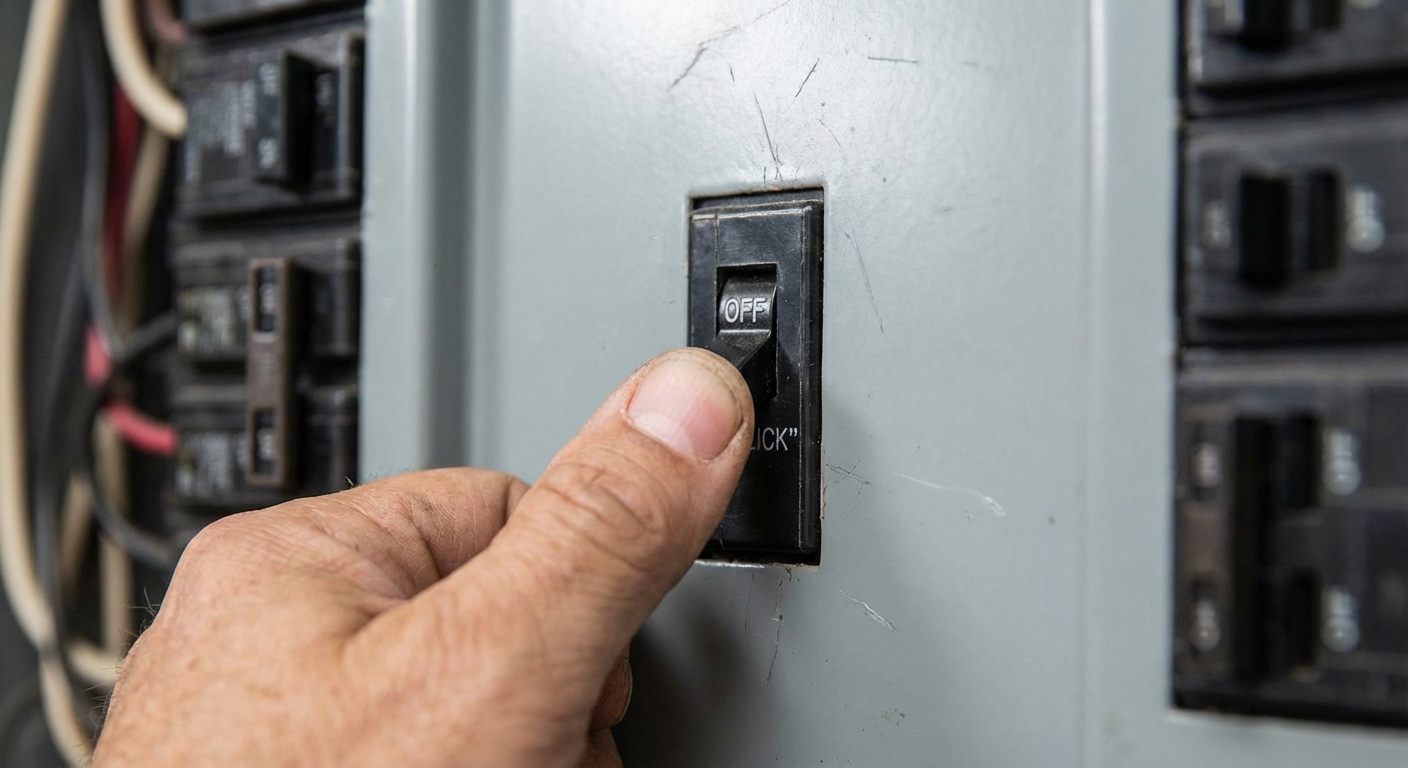
Stop using the switch or outlet and keep clear of the equipment. Avoid trying to open, test or reset equipment that is hot, wet, sparking or visibly damaged.
For a fire, get outside and call 911 from a safe place. Call 911 for an electrical injury. See the U.S. Fire Administration’s escape guidance. Read the electrical emergency first-actions guide before contacting an electrical contractor about an urgent fault. For a scheduled visit, see outlet and switch work.
Take Action Now
If you’re experiencing electrical buzzing, crackling, or any concerning sounds, don’t wait. Contact Sarkinen Electrical for a professional safety inspection. Our team serves Portland, Vancouver, and surrounding communities with fast, reliable electrical diagnostics and repair.
Final Thoughts
For a buzzing outlet or switch, tell the electrician where the noise came from and when it started. See electrical diagnosis and repair or outlet and switch installation.
Contact Sarkinen Electrical
Don’t ignore the warning signs. Protect your home and family with a professional electrical safety inspection.
References:
- U.S. Department of Energy. (2022). Understanding Alternating Current and Electrical Frequency. https://www.energy.gov/articles/how-alternating-current-works
- Electrical Safety Foundation International (ESFI). (2023). Arc Fault Circuit Interrupters (AFCIs). https://www.esfi.org/arc-fault-circuit-interrupters-afcis/
- U.S. Consumer Product Safety Commission (CPSC). (2019). Home Electrical Safety Checklist. https://www.cpsc.gov/s3fs-public/513.pdf
- Occupational Safety and Health Administration (OSHA). (2021). Electrical Safety: Arc Flash and Arc Blast. https://www.osha.gov/electrical/hazards
- National Institute of Standards and Technology (NIST). (2018). Fire Dynamics and Electrical Arcing. https://www.nist.gov/publications/electrical-arcing-and-fire-ignition
- Electrical Safety Foundation International (ESFI). (2024). Home Electrical Fires: Statistics and Safety. https://www.esfi.org/home-electrical-fires/
- National Fire Protection Association (NFPA). (2022). Home Structure Fires Involving Electrical Distribution or Lighting Equipment. https://www.nfpa.org/education-and-research/research/nfpa-research/fire-causes/electrical
- U.S. Fire Administration (USFA/FEMA). (2023). Winter Fire Safety Statistics and Mitigation. https://www.usfa.fema.gov/statistics/residential-fires/
- U.S. Consumer Product Safety Commission (CPSC). (2020). Residential Electrical Fire Hazard Analysis. https://www.cpsc.gov/Research–Statistics/Electrical-Fires