
Table of Contents
- Why Your LED Lights Flicker When Your Old Incandescent Bulbs Never Did
- Inrush Current vs. Electrical Arcing: The Critical Difference Between Safe and Deadly
- How to Systematically Diagnose Your Flickering Lights (and When to Stop and Call Sarkinen Electrical)
- Why Flickering Lights Are More Dangerous in Older Pacific Northwest Homes
- The Sobering Statistics: Why Ignoring Flickering Lights Can Be Fatal
- Final Thoughts
You’re watching TV in your Vancouver living room when the lights suddenly dim as your furnace kicks on. Annoying? Yes. Dangerous? Maybe. Here’s what most homeowners don’t realize: modern LED bulbs are revealing electrical problems that older incandescent bulbs successfully masked for decades. What you’re seeing as a simple flicker might be your home’s electrical system sending you an urgent warning signal—one that could save your family’s life. The statistics are sobering. Electrical failures cause an estimated 46,700 home fires annually in the United States, resulting in 390 deaths, 1,330 injuries, and $1.5 billion in property damage. Even more alarming? More than one-third of homeowners who experienced electrical fires had noticed warning signs like flickering lights but failed to call an electrician. If you live in Vancouver, WA or the Portland Metro area, you’re facing an elevated risk. Many homes in our region were built between 1900 and 1980, and they frequently contain aging electrical infrastructure including aluminum wiring, obsolete panels, and ungrounded systems. The flicker you’re seeing might be the first visible sign of a problem that’s been developing for decades. This comprehensive guide will teach you exactly how to diagnose the cause of your flickering lights, when it’s safe to troubleshoot yourself, and when you need to immediately contact Sarkinen Electrical to prevent a catastrophic fire.
Why Your LED Lights Flicker When Your Old Incandescent Bulbs Never Did
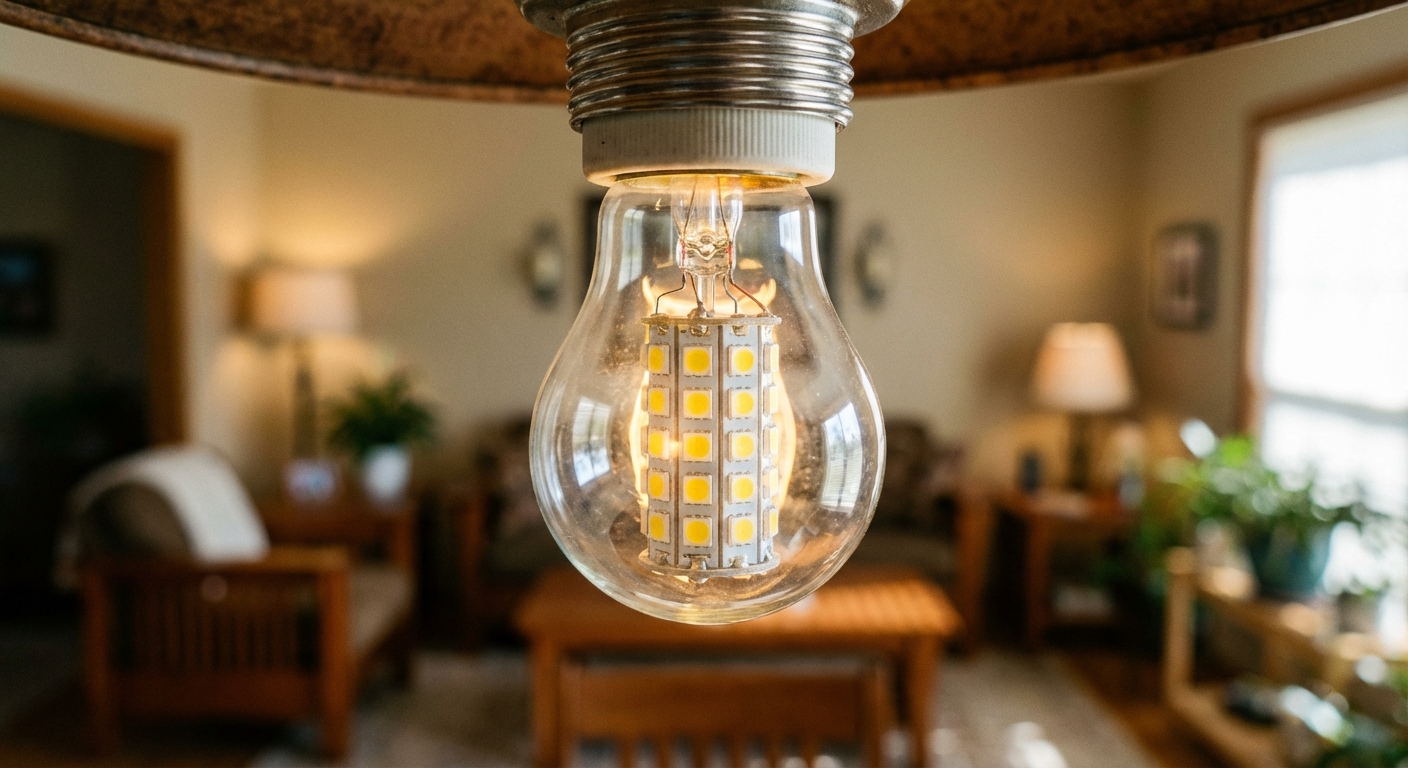
To understand why you’re suddenly noticing flickering lights in your home, you need to understand the fundamental technological difference between the lightbulbs of yesterday and today.
The Incandescent Era
Traditional incandescent bulbs operated through a process called thermal incandescence—essentially heating a tungsten filament to approximately 4,500°F until it glowed. Because the filament retained residual heat, it had thermal inertia. When a minor voltage fluctuation occurred in your home’s electrical system, that stored heat kept the bulb glowing steadily. The fluctuation was happening, but you couldn’t see it.
The LED Revolution
LEDs work completely differently. Instead of heat, they use digital drivers that convert your home’s alternating current into the direct current needed to power light-emitting diodes. According to the U.S. Department of Energy, these digital drivers respond to voltage changes in microseconds—essentially instantaneously. This means LEDs physically display micro-fluctuations in your electrical current that incandescent bulbs successfully hid. That flickering you’re seeing? It’s not a problem with your LED bulbs. It’s a problem with your home’s electrical system that has likely existed for years or even decades.
Why This Matters for Vancouver Homeowners
Your home’s electrical problems didn’t suddenly appear when you switched to LED bulbs. They were always there, masked by older technology. Now, those problems are visible—and that’s actually a good thing.
The Diagnostic Advantage
While frustrating, this LED sensitivity serves as an early warning system. It’s alerting you to voltage irregularities and potential connection issues before they escalate to dangerous arcing conditions that can ignite fires. Think of flickering LEDs as your home’s electrical system trying to communicate with you about its deteriorating health.
Inrush Current vs. Electrical Arcing: The Critical Difference Between Safe and Deadly
Not all flickering is created equal. Understanding the difference between harmless voltage drops and dangerous electrical arcing could save your home and your family’s life.
Harmless: Inrush Current (Voltage Drop)
When motor-driven appliances cycle on—your HVAC system, refrigerator, well pump, or washing machine—they draw a massive momentary surge of electricity. This “inrush current” is often three to six times the appliance’s normal operating current. This creates a brief, predictable voltage drop across your home’s electrical grid, causing lights to dim momentarily. Research from Pacific Northwest National Laboratory confirms this is normal electrical behavior in homes with appropriately sized circuits.
Observable pattern: Lights dim for 1-2 seconds precisely when a specific appliance starts, then immediately return to normal brightness. If this describes your situation and it only happens during major appliance startups, you’re likely experiencing normal inrush current—not a fire hazard.
Hazardous: Electrical Arcing
Electrical arcing occurs when wiring connections loosen, forcing electricity to “jump” or arc across an air gap to complete the circuit. This is where things become extremely dangerous. When electricity arcs, it generates localized temperatures exceeding 10,000°F—hot enough to instantly ignite surrounding insulation, wood framing, and any combustible materials near the connection point. The Electrical Safety Foundation International identifies arcing as one of the primary causes of home electrical fires, responsible for roughly half of all residential electrical fires.
Observable pattern: Rapid, unpredictable, random flickering that’s unrelated to appliance use. Often accompanied by buzzing sounds at outlets or switches, or a burning odor near electrical fixtures or walls.
The Critical Takeaway
If your lights dim briefly and predictably when your furnace or air conditioner starts: likely safe, though an electrician can optimize your system.
If your lights flicker randomly, rapidly, or constantly without correlation to appliance use: potential fire hazard requiring immediate professional inspection from Sarkinen Electrical.
How to Systematically Diagnose Your Flickering Lights (and When to Stop and Call Sarkinen Electrical)
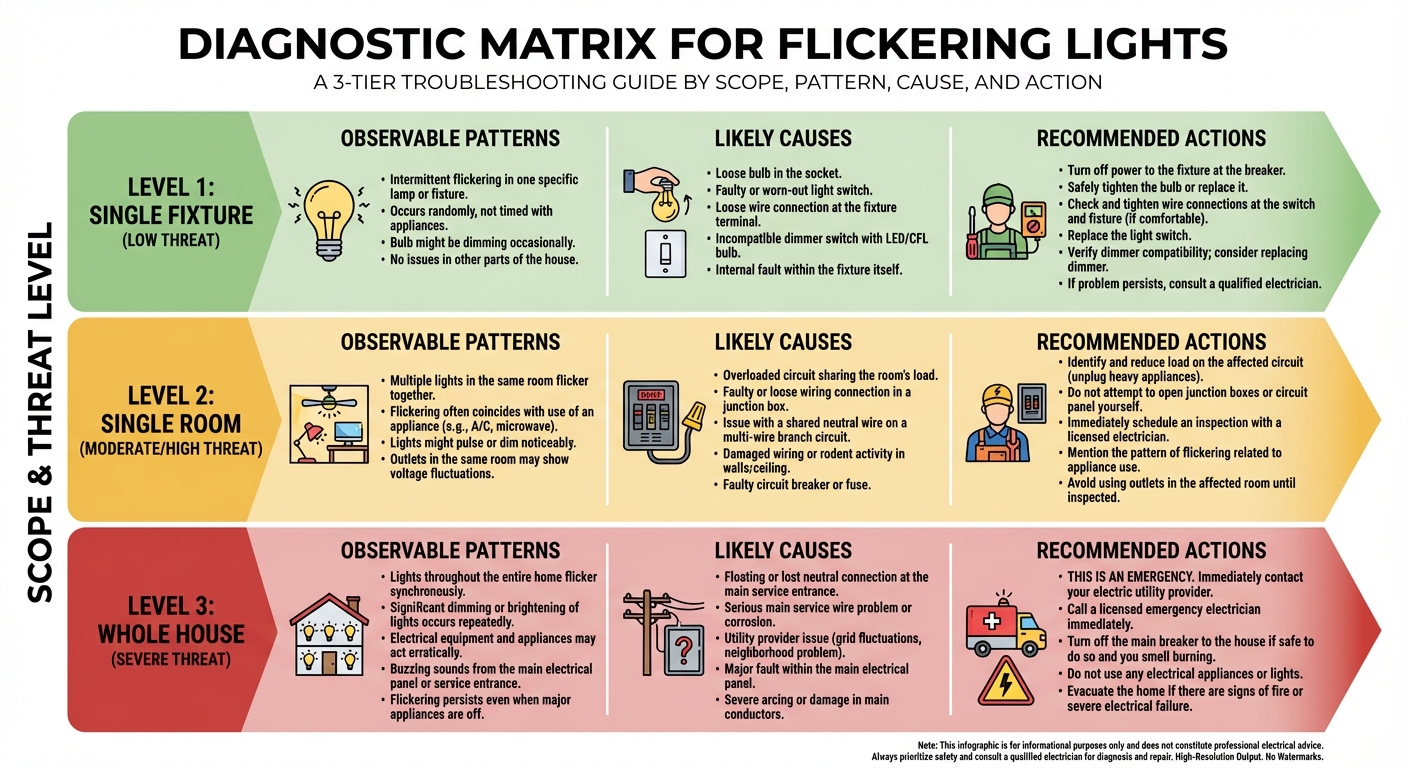
Understanding the scope of your flickering problem is the first step to determining whether you’re facing a simple fix or an emergency situation. Here’s a methodical framework for diagnosis.
Level 1: Single Fixture Flickering (Low Threat)
If the flickering is isolated to one specific lamp or overhead fixture, the problem is highly localized to that single point.
Most likely causes:
- Loose lightbulb (not fully screwed into socket)
- Degrading socket contact points
- Critical compatibility issue: Old incandescent dimmer switches used with modern LED bulbs
This last issue is extremely common and creates a distinctive strobe-like flickering effect. Old dimmer switches were designed for the thermal characteristics of incandescent bulbs and are fundamentally incompatible with LED technology.
Safe homeowner actions:
- Turn off power at the wall switch
- Ensure the LED bulb is fully tightened and rated as “dimmable” (check the packaging)
- Verify the dimmer switch is LED-compatible—look for “LED” or “CFL” marking on the switch itself
- If the switch is an old rotary or slide dimmer from the incandescent era, replace it with a modern TRIAC or ELV dimmer designed for LEDs
When to call Sarkinen Electrical: If flickering persists after verifying bulb tightness and switch compatibility, the socket or fixture wiring may be degraded. This requires professional diagnosis to ensure fire safety. Schedule a safety inspection today.
Level 2: Single Circuit/Room Flickering (Moderate to High Threat)
When an entire room or specific zone of your home experiences simultaneous flickering, you’re dealing with a circuit-level problem. This scenario splits into two distinct possibilities:
Scenario A: Overloaded Circuit
Flickering occurs specifically when you turn on a space heater, hair dryer, microwave, or other high-wattage device. This indicates the circuit is drawing more amperage than it was designed to handle. While not an immediate emergency, this is a capacity problem that needs addressing. Continuously overloading a circuit causes connections to heat up and degrade over time, eventually leading to arcing and fire risk. Consider an electrical upgrade to add dedicated circuits for high-demand appliances.
Scenario B: Loose Connection/Arcing
Flickering happens randomly and unpredictably, with no correlation to when you turn devices on or off. This pattern indicates dangerous arcing inside a junction box or at a connection point within your walls.
Critical distinction: Scenario A is a planning and capacity issue that should be addressed soon. Scenario B is an immediate fire hazard.
Action required: For Scenario B, immediately turn off the circuit breaker controlling that room and contact Sarkinen Electrical for emergency service. Do not use that circuit until it has been professionally inspected and repaired.
Level 3: Whole-House Flickering (SEVERE EMERGENCY)
When lights throughout your entire home flicker, surge, or dim erratically, you’re experiencing a catastrophic main service or utility-side failure.
Most dangerous cause: A “floating neutral” condition where the main neutral wire connecting the utility pole to your home has degraded due to wind damage, tree contact, or age-related corrosion.
The danger: In standard U.S. split-phase electrical systems, two 120-volt “legs” share a single neutral wire. When this neutral degrades or breaks, voltage becomes severely imbalanced. One 120V leg may drop to 60V (causing severe dimming), while the other surges to 180V or higher.
This voltage imbalance will destroy sensitive electronics, cause lightbulbs to explode, and can ignite appliances and electrical devices throughout your home.
IMMEDIATE ACTION REQUIRED
Contact both Sarkinen Electrical (Vancouver: 360-258-0370 | Portland: 503-809-5733) AND your utility provider (Clark Public Utilities or Pacific Power) immediately.
Do not attempt any DIY diagnosis. Turn off your main breaker if possible and wait for professional assistance.
Why Flickering Lights Are More Dangerous in Older Pacific Northwest Homes
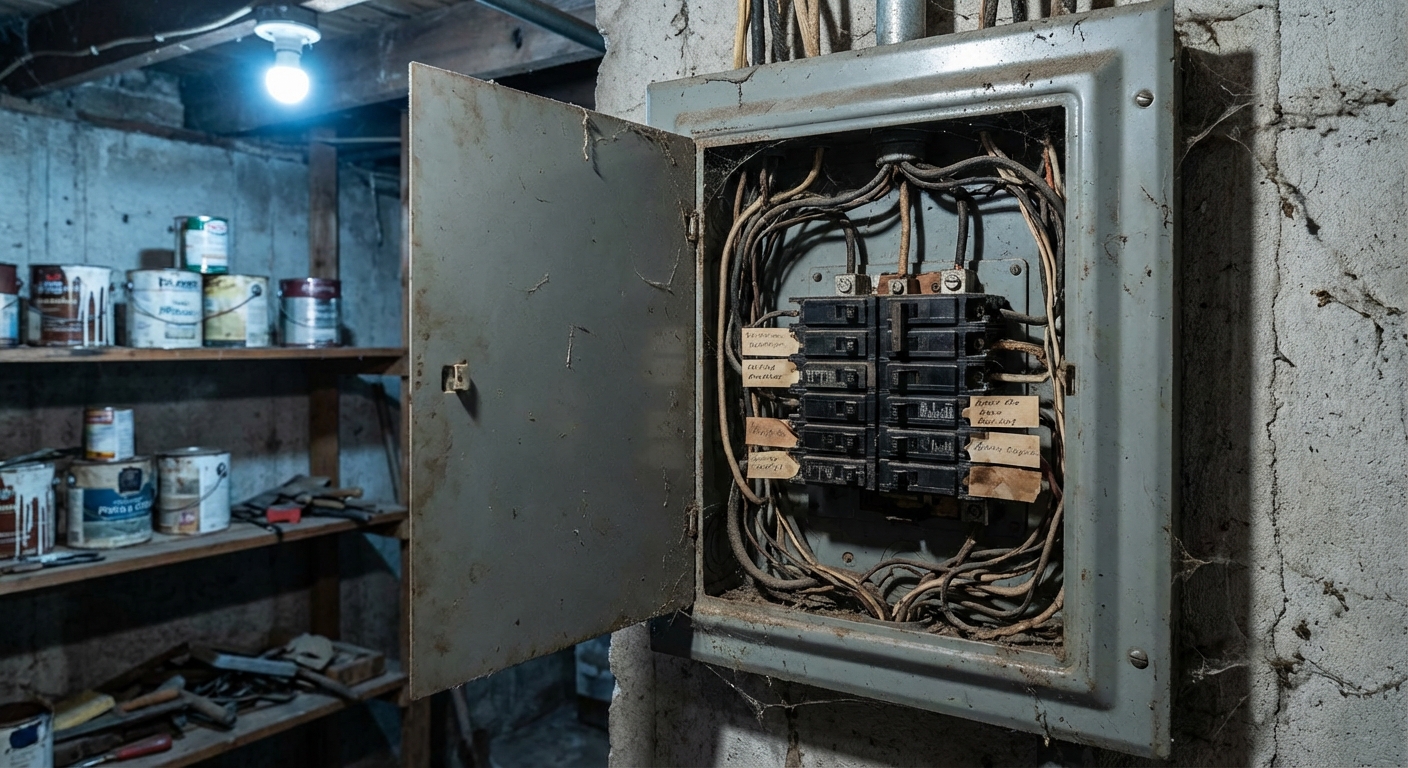
If your home was built before 1980, the flickering lights you’re experiencing carry significantly higher fire risk than they would in a newer home. Here’s why:
The Aluminum Wiring Crisis (1965-1973)
During the copper shortage of the 1960s and early 1970s, many homes in the Pacific Northwest were wired with “old-technology” aluminum wiring as a cost-saving measure. This seemed like a reasonable solution at the time, but decades of research by the Consumer Product Safety Commission has revealed a critical flaw. Aluminum wire expands and contracts at a greater rate than copper when electricity flows through it. Over decades, this thermal “creep” causes connections at outlets, switches, and junction boxes to gradually loosen. The CPSC’s findings are alarming: homes with old aluminum wiring are 55 times more likely to have connections reach fire hazard conditions compared to copper-wired homes.
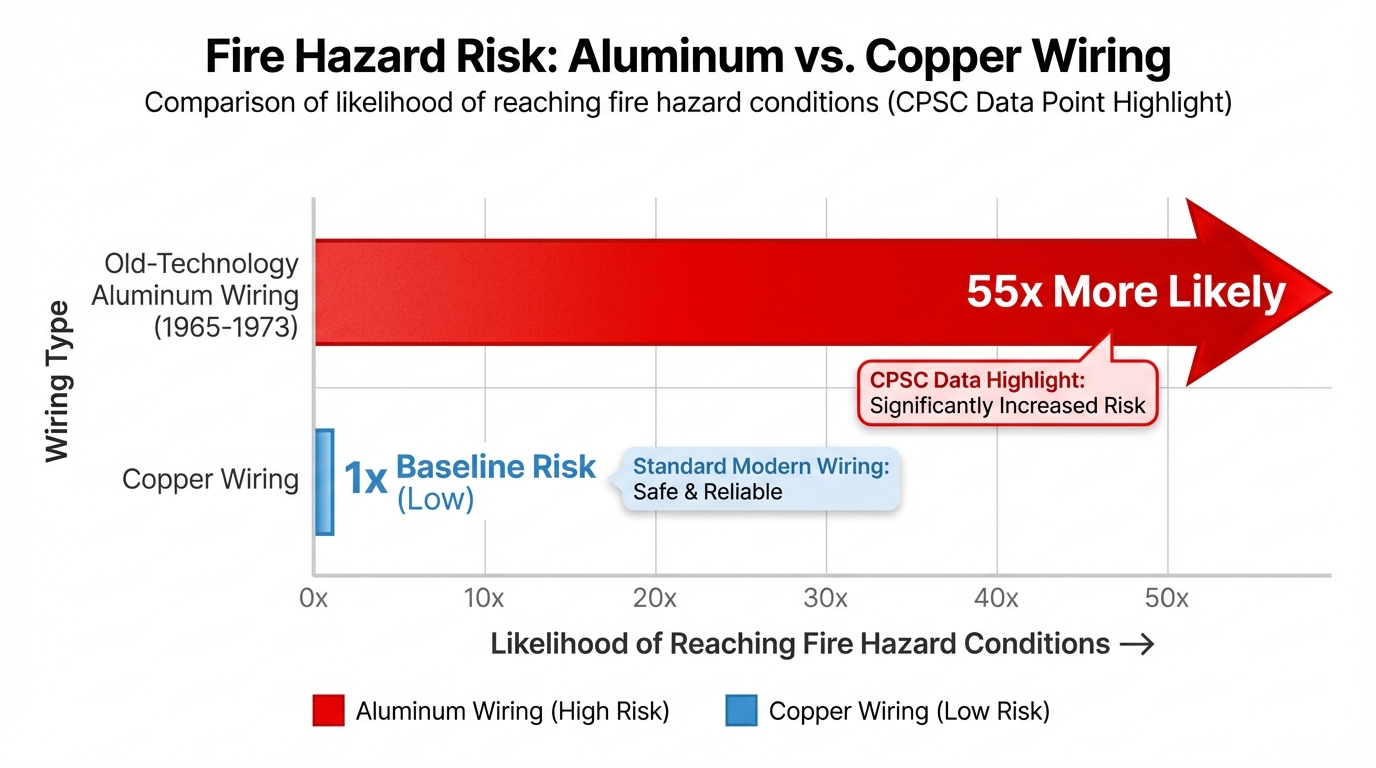
For Vancouver homeowners: If your home was built between 1965-1973 and you’re experiencing flickering lights, aluminum wire degradation is a primary suspect. This requires immediate professional evaluation and likely remediation through copper pigtailing or complete whole house rewiring.
Obsolete and Dangerous Electrical Panels
Federal Pacific Electric (FPE) and Zinsco panels were widely installed in homes built between 1950 and 1980. Both brands have documented failure rates that have led to class-action lawsuits and industry warnings. These panels are notorious for circuit breakers that fail to trip during overload conditions. Instead of cutting power to protect the circuit, the breaker allows the circuit to continue drawing excessive current, causing wires to overheat without any protective mechanism engaging.
Warning sign: If you experience flickering lights that are accompanied by frequently tripped breakers OR breakers that never trip despite obvious circuit overload, panel failure is highly likely. An FPE or Zinsco panel in this condition is a severe fire hazard requiring immediate circuit breaker replacement.
Ungrounded Two-Prong Systems
Homes built before the 1960s often lack proper grounding throughout the electrical system. You can identify these systems by the prevalence of two-prong outlets instead of the modern three-prong grounded outlets. Ungrounded systems increase the risk of electrical shock and make the entire system more susceptible to voltage fluctuations and arcing events. Modern LED drivers and sensitive electronics are particularly vulnerable in ungrounded systems, and the lack of a proper ground path means fault conditions are more likely to result in fires.
The Compounding Effect
Here’s the truly concerning reality: these legacy issues often exist simultaneously. A single home may have aluminum wiring connected to an obsolete Federal Pacific panel with minimal grounding throughout. When these problems compound, flickering lights shift from a “maybe you should check this out” situation to a “call an electrician today” emergency. The combination of factors creates a perfect storm for electrical fire risk. If your Vancouver or Portland-area home was built before 1980, flickering lights should be treated as high-priority safety concerns requiring comprehensive professional evaluation by Sarkinen Electrical.
The Sobering Statistics: Why Ignoring Flickering Lights Can Be Fatal
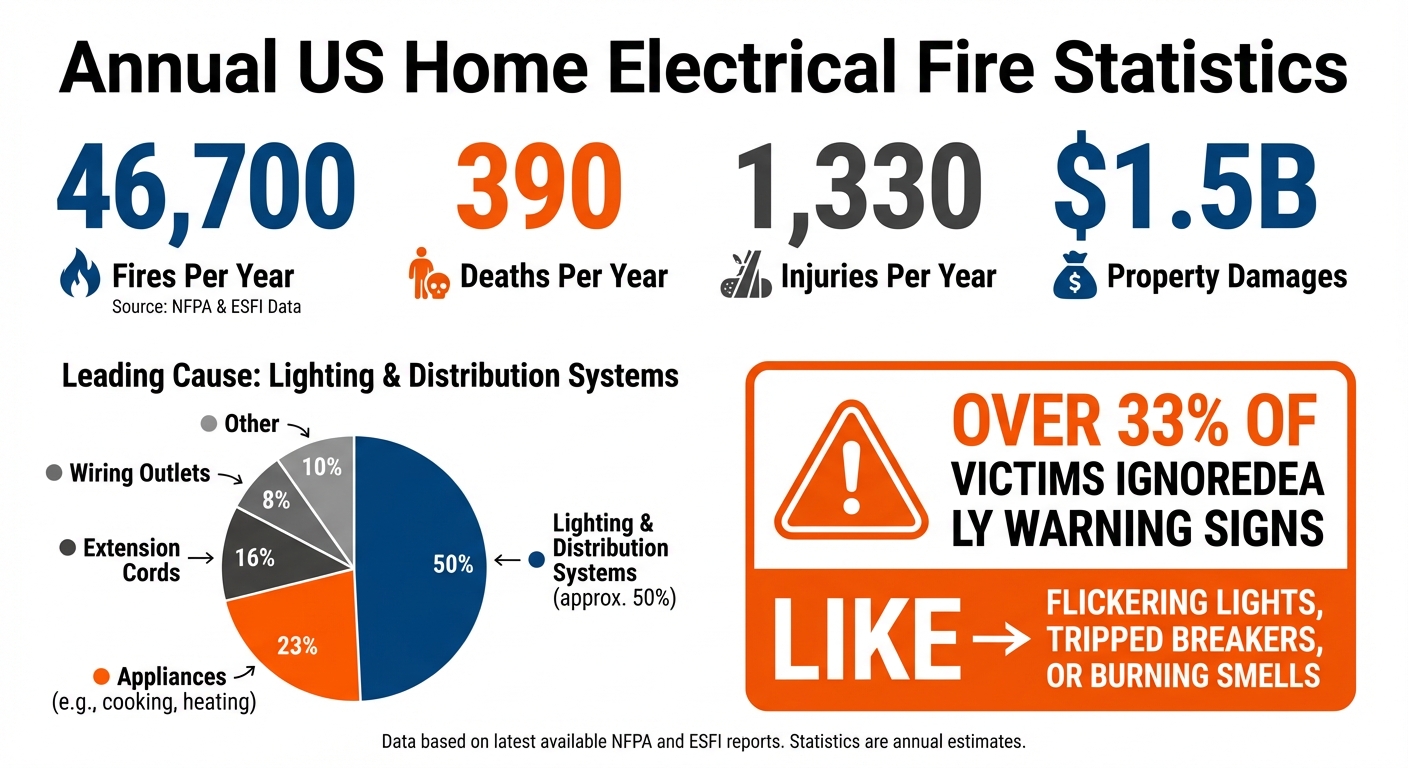
Let’s talk about the statistical reality of electrical fires—because the numbers paint a picture that every homeowner needs to understand.
National Fire Protection Association Data
The NFPA tracks residential electrical fires with meticulous precision, and their findings are sobering:
- Local fire departments respond to an estimated 46,700 home structure fires annually involving electrical failure or malfunction
- These fires cause 390 civilian deaths every year
- 1,330 civilian injuries result from electrical fires annually
- Direct property damage totals $1.5 billion per year
Lighting equipment and electrical distribution systems—the wiring, panels, and outlets throughout your home—are the leading causes, responsible for approximately 50% of all home electrical fires.
The Tragedy of Ignored Warning Signs
Here’s the statistic that should concern every homeowner experiencing flickering lights: in homes where electrical fires occurred, the Electrical Safety Foundation International found that more than one-third of homeowners had noticed warning signs before the fire. These homeowners saw flickering lights. They experienced frequently tripped breakers. They heard buzzing from outlets. But they didn’t call an electrician before tragedy struck. These represent preventable tragedies. Professional electrical inspection could have identified and corrected the dangerous conditions before they escalated to fire.
Local Context for Vancouver Homeowners
While these national statistics are alarming on their own, the risk is statistically elevated in areas with high percentages of pre-1980 housing stock. Clark County’s housing age profile places Vancouver-area homes in a higher-risk category for electrical system degradation. When you combine older infrastructure with the warning signs your home is already showing through flickering lights, the statistical risk becomes impossible to ignore.
The Cost-Benefit Reality
A professional electrical safety inspection from Sarkinen Electrical costs a fraction of a typical home insurance deductible—usually several hundred dollars compared to deductibles of $1,000 to $2,500 or more. When you consider that the average residential electrical fire causes over $32,000 in damage (and that figure doesn’t account for injury, death, or total loss of the home), preventive electrical service becomes an extraordinarily cost-effective safety investment.
The Actionable Message
If you’re experiencing flickering lights and your home is over 40 years old, the statistical risk alone justifies immediate professional evaluation. You don’t want to become part of the one-third of fire victims who ignored the warning signs.
Don’t become a statistic. Electrical fires are highly preventable with proper inspection and remediation.
Final Thoughts
Flickering lights are your home’s electrical system speaking to you. Learning this language can save your family’s life and protect your most valuable asset. The diagnostic framework is clear: single-fixture flickering is often a simple compatibility or connection issue that you can address yourself by checking bulb tightness and upgrading old dimmer switches. Single-circuit flickering requires investigation to determine whether you’re dealing with an overloaded circuit or dangerous arcing. Whole-house flickering demands immediate emergency response from both an electrician and your utility provider. For Vancouver and Portland Metro homeowners, the imperative is even more urgent. Our region’s aging housing stock, prevalence of aluminum wiring in 1960s-1970s construction, and common presence of obsolete panel systems like Federal Pacific and Zinsco create elevated fire risk. When you add the fact that over 46,700 electrical fires occur annually nationwide—with more than one-third involving ignored warning signs—professional electrical inspection becomes essential preventive safety, not optional maintenance. Sarkinen Electrical’s licensed electricians have the diagnostic tools, technical expertise, and safety training to accurately identify and remediate electrical hazards that remain invisible to homeowners. We understand the unique challenges of Pacific Northwest housing stock, and we’ve helped countless Vancouver-area families address dangerous electrical conditions before they escalated to emergencies.
Ready to Ensure Your Home’s Electrical Safety?
Experiencing flickering lights in your Vancouver or Portland-area home? Don’t wait for a warning sign to become a tragedy.
Contact Sarkinen Electrical today:
Vancouver: 360-258-0370
Portland: 503-809-5733
Schedule Your Safety Inspection
Your family’s safety is too important to leave to chance.
References:
- U.S. Consumer Product Safety Commission (CPSC). (2011). Repairing Aluminum Wiring. https://www.cpsc.gov/s3fs-public/516.pdf
- Pacific Northwest National Laboratory (PNNL). (2014). Understanding LED Dimming and Voltage Issues. U.S. Department of Energy. https://www1.eere.energy.gov/buildings/publications/pdfs/ssl/led_dimming_issues.pdf
- Electrical Safety Foundation International (ESFI). (2023). Understanding Arc Faults and Electrical Safety. https://www.esfi.org/understanding-arc-fault-circuit-interrupters-afcis/
- U.S. Department of Energy. (2023). Lighting Choices to Save You Money (LED Compatibility). https://www.energy.gov/energysaver/lighting-choices-save-you-money
- National Fire Protection Association (NFPA). (2022). Home Electrical Fires Statistical Report. https://www.nfpa.org/education-and-research/research/nfpa-research/fire-statistical-reports/electrical-fires
- Electrical Safety Foundation International (ESFI). (2022). Home Electrical Fires Statistics and Survey Data. https://www.esfi.org/home-electrical-fires/
- IEEE Standards Association. (2023). IEEE 1453 – Recommended Practice for the Analysis of Fluctuating Installations on Power Systems (Flicker). https://standards.ieee.org/ieee/1453/4308/