
Table of Contents
- Understanding Power Outages in Washington and Oregon: It’s Not Just Winter Storms Anymore
- Portable Generators: When “Good Enough” Might Not Be Good Enough
- Whole-House Standby Generators: Automatic Protection for Modern Homes
- The Hidden Dangers: Why Generator Safety Is Non-Negotiable
- The Investment Equation: What You’re Really Paying For
- How to Choose: Matching Your Home, Budget, and Lifestyle to the Right Solution
- Final Thoughts
It’s 7 PM on a Tuesday in January. The wind is howling outside your Vancouver home when suddenly—darkness. Your heat pump stops. Your Wi-Fi dies. And if you work from home or have medical equipment, you’re now facing a genuine crisis. This scenario is becoming increasingly common across the Pacific Northwest. According to the U.S. Energy Information Administration, the average U.S. customer experiences over seven hours of power interruptions annually, with the Pacific Northwest often exceeding this during severe weather. Between atmospheric rivers, ice storms, and Public Safety Power Shutoffs designed to prevent wildfires, power reliability in Washington and Oregon has become a critical concern for homeowners. The question facing many residents isn’t whether they need backup power—it’s which type makes the most sense. Should you invest in a portable generator for occasional use, or is a whole-house standby system the smarter long-term solution? In this comprehensive guide, we’ll examine the comparative costs, safety considerations, power capacity needs, and specific climate factors that make the Pacific Northwest unique when it comes to backup power decisions.
Understanding Power Outages in Washington and Oregon: It’s Not Just Winter Storms Anymore
The Pacific Northwest faces distinct power reliability challenges that set it apart from other regions of the country. Understanding these unique factors is essential to making an informed decision about backup power.
The New Normal of Grid Instability
Vegetation management failures—trees striking power lines—represent the primary cause of distribution failures in densely wooded suburbs like Vancouver, Portland, Beaverton, and Hillsboro. The region’s lush, tree-lined neighborhoods that give it such character also create constant pressure on aging electrical infrastructure struggling to meet modern demand.
Public Safety Power Shutoffs: A Growing Reality
Unlike storm-related outages that occur unpredictably, Public Safety Power Shutoffs are planned events. Utilities like Portland General Electric and Pacific Power now preemptively cut power during high-wind, dry conditions to prevent wildfire ignition. These PSPS events can last days rather than hours, and they’re becoming increasingly frequent as wildfire risk grows across the region.
Weather Volatility Beyond Traditional Patterns
The Pacific Northwest’s weather patterns are becoming increasingly erratic. Atmospheric rivers bring sustained high winds and heavy precipitation that can knock out power for extended periods. Ice storms cause cascading infrastructure failures across multiple counties. Unlike regions with predictable storm seasons, PNW homeowners face weather-related power threats nearly year-round.
The Stakes Are Higher Than Ever
Modern homes depend on electricity for far more than lighting. Heat pumps provide both heating and cooling. Security systems protect your property. Medical equipment supports health needs. Refrigeration preserves food. And increasingly, remote work infrastructure requires constant connectivity. Brief outages are inconvenient, but extended outages can cause serious property damage—frozen pipes, flooded basements from failed sump pumps—and genuine safety hazards.
Portable Generators: When “Good Enough” Might Not Be Good Enough
Portable generators represent the traditional approach to backup power. They offer certain advantages, but their limitations become particularly problematic in Pacific Northwest conditions.
What Portable Generators Do Well
The appeal of portable generators is straightforward. With an upfront cost ranging from $500 to $2,000 for quality units, they represent a more accessible entry point than whole-house systems. Their mobility means you can use them for camping, job sites, or even move them between properties. For powering a few essential circuits during brief outages, they can serve a legitimate purpose.
The Pacific Northwest Weather Problem
Here’s where portable generators face their most significant challenge in our region. The Consumer Product Safety Commission explicitly warns against operating portable generators in wet conditions without protective enclosures. Yet rain is precisely the norm during PNW outages. Operating these units during storms creates serious electrocution risks, and finding adequate weather protection while maintaining proper ventilation becomes a dangerous balancing act. The region’s high humidity also accelerates gasoline degradation, requiring fuel stabilizers and frequent replacement of stored fuel—adding both cost and maintenance burden to portable generator ownership.
Power Quality Issues That Damage Electronics
Most portable generators produce what electrical engineers call “dirty power”—electricity with Total Harmonic Distortion of 10-20%. This fluctuation damages sensitive electronics including smart home systems, modern furnace controls, computers, and LED lighting.
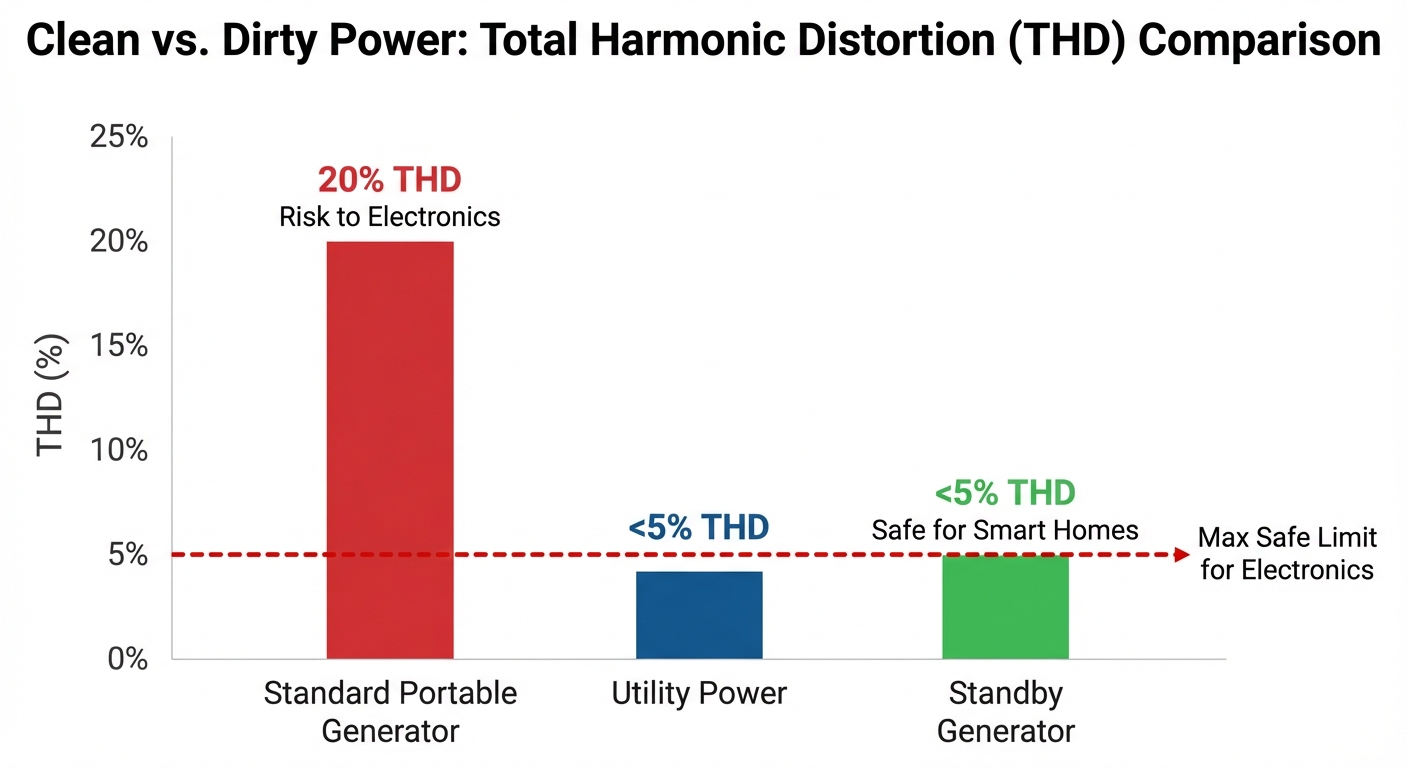
As the chart above illustrates, the difference between portable and standby generators in power quality is dramatic. While inverter-type portable generators can improve THD performance, they come at a significantly higher cost—often $2,000 to $4,000—closing much of the price gap with professionally installed standby systems.
Capacity Limitations
A typical portable generator produces 3kW to 8kW of output, which only powers essential circuits—not your whole home. You cannot handle high-draw appliances simultaneously. Heat pumps, EV chargers, and electric water heaters all require more power than most portable units can safely deliver. This forces constant load management decisions: Do you run the heat or the refrigerator? Can you charge your phone while keeping the sump pump running?
The Operational Burden
Consider the reality of using a portable generator during a Pacific Northwest winter storm. You’re dragging a 200-pound unit out of your garage at midnight in driving wind and rain. You’re running extension cords through windows, creating security vulnerabilities. You’re waking every 6-10 hours to refuel—meaning interrupted sleep during extended outages. Meanwhile, your heat pump sits idle because the generator can’t handle its starting surge. The noise levels of 70-85+ decibels can violate local noise ordinances and disturb neighbors throughout multi-day outages. Gasoline storage becomes problematic, and during widespread outages, fuel shortages often occur as gas stations either close or run out of supply.
Whole-House Standby Generators: Automatic Protection for Modern Homes
Whole-house standby generators address every limitation of portable systems while providing utility-grade reliability specifically suited to Pacific Northwest conditions.
Automatic Operation When You Need It Most
An Automatic Transfer Switch continuously monitors your home’s power 24/7. When it detects power loss, the system activates within 10-20 seconds—no human intervention required. This automation is critical when you’re away from home, asleep, or physically unable to manage manual setup. Your sump pumps keep running. Your pipes don’t freeze. Your security systems stay active.
Utility-Grade Power Quality
Standby generators produce clean electricity with less than 5% Total Harmonic Distortion—safe for all modern electronics, smart home systems, and sensitive medical equipment. You never need to worry about damaging appliances or computer hardware. Your home operates exactly as it would on utility power.
Comprehensive Capacity for Whole-Home Power
Systems sized from 22kW to 26kW+ can power your entire home simultaneously. They handle high-draw loads including heat pumps, central air conditioning, Level 2 EV chargers, and electric ranges without hesitation. Advanced load-shedding technology manages starting surges from motors and compressors, something portable units simply cannot do.
Continuous Fuel Supply
By connecting to your existing natural gas line or propane tank, standby generators eliminate gasoline storage, stabilization, and refueling burdens entirely. They run indefinitely as long as utility fuel supply remains operational—which is typically unaffected by electrical outages. No midnight refueling trips. No concerns about finding gas during widespread emergencies.
Weather-Sealed and Code-Compliant Installation
Permanently installed outdoor enclosures are designed for all-weather operation. Professional installation by licensed electricians like those at Sarkinen Electrical ensures safe clearances from your home and proper exhaust ventilation. This eliminates the carbon monoxide risks associated with portable units while ensuring the transfer switch prevents dangerous “backfeeding” that endangers utility workers.
Noise Considerations
Sound-attenuated housing limits operation to 55-65 decibels—quieter than a normal conversation. Your standby generator won’t disturb neighbors during extended outages. Weekly self-test cycles typically run for just 15 minutes, keeping the system ready without excessive noise pollution.
Maintenance and Longevity
Weekly automatic self-diagnostics identify potential issues before they cause failure. Professional annual service—similar to HVAC maintenance—keeps the system running reliably. With proper maintenance, standby generators deliver 20-30 years of service life, representing significantly less maintenance burden than portable units requiring frequent oil changes and carburetor service.
The Hidden Dangers: Why Generator Safety Is Non-Negotiable
Safety represents perhaps the most critical differentiator between portable and standby generators, backed by sobering data that every homeowner should understand.
Carbon Monoxide: The Silent Killer
Between 2011 and 2021, over 880 non-fire carbon monoxide deaths were associated with engine-driven tools, with portable generators as the leading cause. These fatalities spike dramatically during major weather events—precisely when people bring generators closer to homes to escape rain.
The Pacific Northwest Temptation
During prolonged rain events—the norm during outages here—homeowners face tremendous temptation to operate portable generators in garages, carports, or covered patios. This is exactly when the risk becomes lethal. Enclosed or semi-enclosed spaces allow CO buildup that can kill entire families.
Standby Generator Safety Design
Professionally installed standby generators are permanently placed at minimum code-required distances from your home—typically at least five feet from windows, doors, and HVAC intakes. Exhaust is directed away from structures. Professional installation by licensed electricians ensures compliance with local building codes specifically designed to prevent carbon monoxide tragedies.
Backfeeding and Grid Safety
“Backfeeding”—plugging a generator directly into a wall outlet—sends electricity back onto utility lines. This can electrocute utility workers attempting to restore power, potentially with fatal consequences. Standby generators use code-compliant transfer switches that physically isolate your home from the grid, eliminating this risk entirely.
Why Installation Matters
Only licensed electricians should install transfer switches and standby systems. Improper installation voids warranties and creates significant liability exposure. Professional installation includes proper grounding, accurate load calculations, and inspection sign-offs that ensure your system operates safely and legally.
The Investment Equation: What You’re Really Paying For
Understanding the true cost of backup power requires looking beyond sticker prices to total cost of ownership over the system’s lifetime.
Upfront Costs: The Initial Investment
| Generator Type | Equipment Cost | Installation Cost | Total Initial Investment |
|---|---|---|---|
| Portable Generator | $500 – $2,000 | $500 – $1,500 | $1,000 – $3,500 |
| Whole-House Standby | $5,000 – $10,000 | $3,000 – $5,000 | $8,000 – $15,000 |
Yes, standby systems cost three to five times more initially, but the comparison doesn’t end there.
Operational Costs Over Time
Portable generators consume gasoline during outages—expensive, especially during emergencies when prices often spike. You’ll need fuel stabilizers, storage containers, frequent oil changes, spark plug replacements, and you’ll face potential fuel spoilage if the unit isn’t used regularly. Standby generators consume natural gas or propane only during outages and weekly self-tests. Annual professional maintenance runs $150-$300. The per-hour operational cost is significantly lower than portable units.
Hidden Costs of Portable Systems
Quantify the time investment: 1-2 hours of setup and refueling work per day during outages. Factor in potential damage to electronics from poor power quality. Consider property damage from frozen pipes or flooded basements if the system fails or you’re unable to operate it. Account for medical risks if you’re away, elderly, or mobility-impaired when an outage strikes.
Home Value and Return on Investment
Remodeling Magazine’s Cost vs. Value Report indicates standby generators recoup 50-70% of installation cost in home resale value. They’re increasingly viewed as essential infrastructure in regions with unreliable power—a selling point differentiator in competitive real estate markets. Some insurance companies even offer premium reductions for homes with standby power systems.
How to Choose: Matching Your Home, Budget, and Lifestyle to the Right Solution
Making the right decision requires honest assessment of your specific situation, needs, and constraints.
Consider a Portable Generator If:
- You experience very infrequent, short-duration outages—perhaps one or two per year, typically under 12 hours
- Your essential loads are minimal—just a refrigerator, a few lights, and phone charging
- You’re physically capable of setup and operation in adverse weather conditions
- Budget constraints currently make standby systems unaffordable
- You’re in a rental or temporary housing situation where permanent installation isn’t feasible
Consider a Whole-House Standby If:
- You experience multiple or prolonged outages annually
- You work from home and cannot afford connectivity loss
- Your household includes medical equipment or family members with health vulnerabilities
- Your home uses an electric heat pump or has high electrical demands like EV charging, aquariums, or home office equipment
- You travel frequently and need automated protection whether you’re home or not
- You’re age 60 or older, or have mobility limitations that make portable generator operation difficult or dangerous
- You view your home as a long-term investment where you’ll remain for five or more years
The Sarkinen Electrical Consultation Difference
Professional load calculation determines your actual power needs—not guesswork. Site assessment identifies optimal generator placement for safety and efficiency. Fuel source evaluation determines whether natural gas availability or propane tank installation makes more sense for your property. We handle permit acquisition and code compliance, providing transparent pricing with no hidden costs.
Ready to Protect Your Pacific Northwest Home?
Contact Sarkinen Electrical today for a personalized assessment. Our licensed electricians will evaluate your specific needs and provide a transparent quote for professional installation.
Final Thoughts
The decision between portable and standby generators represents more than a simple power calculation—it’s about protecting your home, family, and lifestyle against increasingly frequent and unpredictable outages. Standby generators represent a significant investment, certainly. But they deliver dividends in safety, convenience, and home value that compound over years of reliable service. Pacific Northwest conditions—frequent rain, high winds, and PSPS events—make the “set it and forget it” nature of standby systems particularly valuable in our region. The safety concerns with portable generators, especially carbon monoxide poisoning risks during the wet weather that accompanies PNW outages, cannot be overstated. As grid reliability challenges increase and climate patterns become less predictable, backup power transitions from luxury to necessity. Here’s the truth about timing: The best time to install a standby generator is before you need it. When the power goes out, it’s too late to make the decision—you’re forced to live with the choice you made, or didn’t make, beforehand. Don’t wait until the next storm to wish you’d acted. Take control of your home’s power reliability today.
References:
- U.S. Energy Information Administration. “U.S. electricity customers experienced an average of five and a half hours of power interruptions in 2022.” https://www.eia.gov/todayinenergy/detail.php?id=61303
- Portland General Electric. “Wildfire Outages and Public Safety Power Shutoffs.” https://portlandgeneral.com/wildfire-outages-psps
- Consumer Product Safety Commission. “Portable Generator Safety.” https://www.cpsc.gov/Safety-Education/Safety-Education-Centers/Carbon-Monoxide-Information-Center/Generators
- Electrical Safety Foundation International. “Portable Generators vs. Standby Generators.” https://www.esfi.org/generator-safety/
- Consumer Reports. “Generator Buying Guide.” https://www.consumerreports.org/cro/generators/buying-guide/index.htm
- This Old House. “How to Choose a Backup Generator.” https://www.thisoldhouse.com/electrical/21015197/choosing-a-backup-generator
- Generac Power Systems. “Understanding Generator Noise Levels.” https://www.generac.com/be-prepared/home-backup/generator-noise-levels
- Consumer Product Safety Commission. “Fatal Incidents Associated with Non-Fire Carbon Monoxide Poisoning.” https://www.cpsc.gov/s3fs-public/NonFireCarbonMonoxideDeathsAssociatedwithEngineDrivenTools20112021.pdf
- Occupational Safety and Health Administration. “Generator Safety and Backfeeding.” https://www.osha.gov/sites/default/files/publications/OSHA3286.pdf
- U.S. Department of Energy. “Using Backup Generators.” https://www.energy.gov/ced/using-backup-generators
- Remodeling Magazine. “2023 Cost vs. Value Report.” https://www.remodeling.hw.net/cost-vs-value/2023/
Looking for professional help? Learn about our generator installation and maintenance services available throughout the Vancouver-Portland metro area.